
Menopause & Hip Health
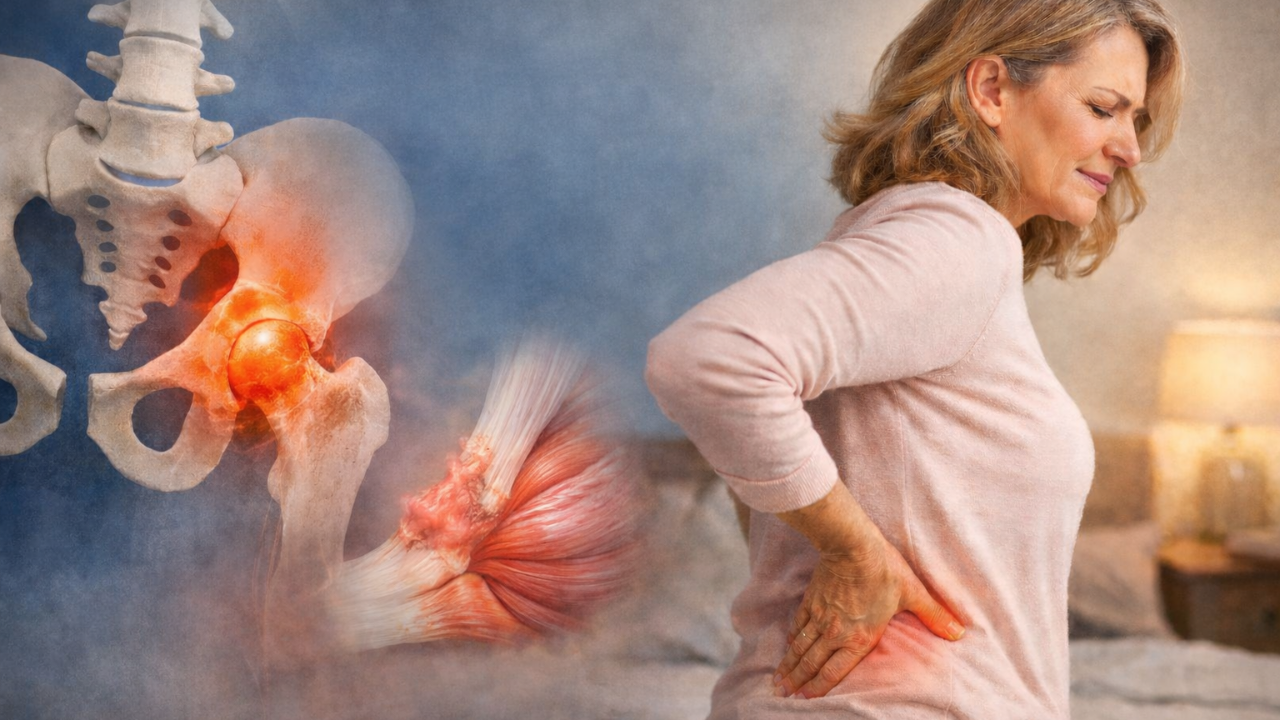
One of the most common things I see in clinic at the moment isn’t hot flushes…
It’s hip pain.
And it often comes out of nowhere.
Women tell me:
-
“My hip has tightened up and won’t loosen.”
-
“It feels like my body is protecting it.”
-
“I can’t cross my legs anymore.”
-
“It’s stiff getting out of the car.”
-
“It’s painful at night — especially lying on that side.”
If any of this sounds familiar, you’re not imagining it — and it’s not just ageing.
There’s a very real menopause connection.
Most women think of oestrogen as a reproductive hormone, but it’s actually a joint and tissue-protective hormone too.
Oestrogen helps support:
-
collagen (tendons, ligaments, fascia)
-
cartilage health
-
muscle repair and strength
-
inflammation control
-
pain perception in the nervous system
So as oestrogen starts fluctuating (often wildly) in perimenopause, and then declines, the hips can become more vulnerable to:
-
tendon irritation
-
fascia tightening
-
inflammation
-
stiffness
-
pain sensitisation (everything feels more intense)
In other words, your hip may not be “injured”… it may be under-supported and inflamed, and your body is reacting by tightening everything around it.
I often describe this as a hip that has gone into guard mode.
The body feels instability, inflammation or threat and responds with:
-
tight hip flexors
-
tight glutes / piriformis
-
reduced rotation
-
stiffness when standing up
-
pain on stairs
-
reduced walking stride
-
sometimes even a limp
It’s the body trying to stabilise the hip by clamping down around it.
The problem is… the tighter it gets, the more it hurts.
What about a “frozen hip”?
Most people have heard of frozen shoulder, but something very similar can happen in the hip.
Women describe it as:
-
“It’s like the joint won’t move properly”
-
“I’ve lost mobility and flexibility”
-
“I can’t get my leg into certain positions”
-
“Socks/shoes are harder”
-
“Getting out of the car is awkward and painful”
When this happens, the hip joint capsule (connective tissue around the joint) can become inflamed, thickened, and restricted.
And yes — this pattern shows up frequently in midlife women.
The most important thing to know: stretching alone won’t fix it
A protective hip doesn’t need forceful stretching.
It needs support.
The hip guards when it feels unstable. so if you only stretch it, it often tightens straight back up again.
What works better is this combination:
1) Gentle mobility (not aggressive stretching)
Hip circles, gentle rotations, walking, heat, pool movement — all great.
2) Glute strength
This is the big one.
If glutes weaken (which is common in perimenopause), the hip becomes overloaded and painful.
Simple exercises like:
-
clamshells
-
glute bridges
-
banded side steps
…can be life-changing for hip pain.
3) Inflammation + tissue support
To calm the irritated tissue you often need:
-
adequate protein
-
magnesium (especially if night pain and tension are present)
-
omega-3 fats
-
collagen + vitamin C support
And of course: reducing the big drivers of joint inflammation in midlife (sugar, alcohol, poor sleep and chronic stress).
4) Nervous system down-regulation
This is often the missing piece.
Protective hips are tightly linked to stress, overload and poor sleep.
When the nervous system is stuck in fight/flight, muscles stay tense and pain sensitivity rises.
So calming strategies matter:
-
breathwork
-
magnesium at night
-
heat therapy
-
evening wind-down routine
The hip often starts to soften once the body feels safe again.
If your hip pain has been creeping in over the past year, or your mobility is starting to feel restricted, please don’t ignore it.
In many cases, we can identify what’s driving it (hormones, inflammation, fascia tension, glute weakness, metabolic changes, stress load) and map out a clear plan so you’re not left guessing.
If you’d like support, I invite you to book your initial consultation so we can get started.
Author

Jennifer Harrington
Clinical Director
Menopause Specialist, Naturopath, Nutritionist, Medical Herbalist
Stay connected with news and updates!
Recent Posts
