
Night Time Urination in Menopause: Why It Happens and What Helps
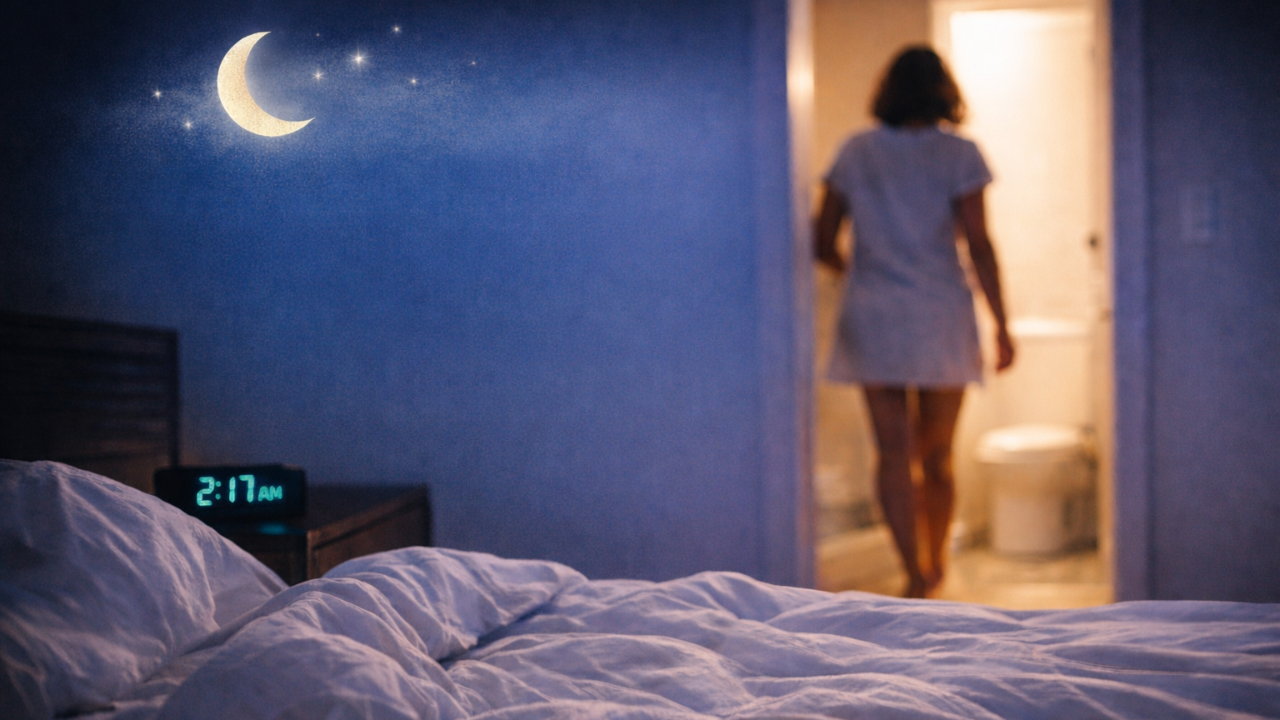
If you’re waking up at night to pee, once, twice, or multiple times, I want you to know you’re not alone.
Night time urination (nocturia) is one of the most common issues I see in midlife women, and it can be incredibly draining. Not just physically, but mentally too. When your sleep is interrupted night after night, everything feels harder: energy, mood, motivation, cravings, memory… even resilience.
And while many women assume it’s “just ageing” or “normal after having kids,” the truth is this:
Nocturia is usually a clue.
A sign that something is out of balance and in most cases, it can improve with the right approach.
Let’s break down why it happens during perimenopause and menopause, and what you can do to reduce it.
Nocturia simply means waking from sleep to urinate.
Waking once can happen from time to time, especially if you’ve had late fluids, alcohol, or a disrupted sleep. But if you’re waking two or more times a night, it usually starts to impact deep restorative sleep, the sleep your hormones and nervous system rely on.
And here’s the key: nocturia isn’t always “a bladder problem.”
Often it’s a combination of hormones + nervous system + sleep physiology.
In perimenopause and menopause, we see a few major shifts that can all contribute.
1) Oestrogen drops, and bladder tissues become more sensitive
Oestrogen helps maintain the strength and resilience of the bladder lining and urethra. As oestrogen declines, tissues can become thinner and more reactive. This can create urgency, frequency, and that annoying “I have to go again” feeling even if the bladder isn’t truly full.
This is part of what’s called GSM (Genitourinary Syndrome of Menopause), and it’s far more common than most women realise.
2) Your nervous system becomes more reactive
If you’re in a constant “go-go-go” mode (work, family, caring responsibilities, stress), your body tends to sit in a higher alert state. And when the nervous system is activated, it can increase bladder sensitivity.
I often say: many women don’t have a weak bladder, they have a wired bladder.
3) Sleep becomes lighter, and the bladder gets blamed
If you’re already waking due to hot flushes, stress, blood sugar dips, or anxiety, it’s very easy to then notice the bladder and decide you may as well go.
Over time, urinating becomes part of the wake cycle. Even when it’s small volumes.
4) You may be producing more urine overnight
Normally we release hormones at night that help us conserve fluid so we can stay asleep. In midlife that rhythm can change, and some women begin producing more urine overnight.
This is why some women wake with a strong urge and larger volumes.
A simple way to understand nocturia (3 patterns)
To improve nocturia, we need to know which “pattern” you’re in.
Pattern 1: Too much urine at night
Often linked to late fluids, salty dinners, alcohol, leg fluid pooling, or sleep apnoea.
Pattern 2: Bladder irritation
Often linked to GSM, previous UTIs, pelvic tension, or bladder irritants.
Pattern 3: Sleep disruption first
You wake because of stress/hot flushes/anxiety, and urinate because you’re awake anyway.
Most women are a mix of two patterns, which is why a one-size-fits-all solution rarely works.
What helps: practical strategies I use in clinic
1) Do a simple 3-day bladder diary
This is one of the most helpful steps because it gives us clarity.
Write down:
-
what you drink and when
-
how many times you wake
-
whether the volume is small or large
This alone often reveals what’s driving the problem.
2) Front-load fluids earlier in the day
Instead of drinking heavily in the evening, aim to hydrate well in the morning and early afternoon.
A simple rule that works well:
reduce fluids 2–3 hours before bed, and sip rather than guzzle at night.
3) Trial reducing key bladder irritants (temporarily)
You don’t need a restrictive life-long diet, but for 2–3 weeks it can be incredibly helpful to trial reducing common irritants like:
caffeine, alcohol, carbonated drinks, spicy foods, citrus, tomatoes, artificial sweeteners.
This helps us identify whether irritation is playing a role.
4) Reduce evening salt and alcohol
Salt draws fluid into the bloodstream and increases urine output. Alcohol does the same and fragments sleep at the same time.
If you’re waking a lot at night, this is one of the highest-impact changes you can make.
5) Elevate legs late afternoon (if fluid pooling is a factor)
If your ankles swell even slightly by the end of the day, fluid is pooling in the legs. When you lie down, that fluid shifts back into circulation and your kidneys have to process it overnight.
Try:
15–20 minutes of legs up the wall in the late afternoon or evening for 7–10 days and see what changes.
6) Calm the nervous system before bed
This is a missing piece for many women.
When the nervous system finally downshifts, the bladder settles too.
Even small shifts matter here:
a slower bedtime routine, magnesium glycinate, breathwork, stretching, and reducing screen stimulation.
7) Don’t ignore GSM support
If bladder tissue changes are a key driver, local vaginal support can be life changing.
For some women this includes:
-
moisturising support (like sea buckthorn)
-
pelvic floor physiotherapy
-
and, when appropriate, discussing local vaginal oestrogen with a GP (this is not the same as systemic HRT)
When to get checked
Please seek medical support if you have pain, burning, blood in urine, fever, sudden severe frequency, or symptoms of sleep apnoea such as loud snoring, morning headaches, or daytime fatigue.
Final thoughts
Nocturia isn’t “just annoying.” It’s often one of the biggest drivers of ongoing exhaustion in midlife.
But the most important thing I want you to hear is this:
Night time urination is not something you just have to live with.
In most women, once we identify the pattern and treat the real driver, it improves.
Want help getting to the root cause?
If you’re tired of guessing, and ready to work with a plan that fits your body, you can book a consultation with our team at Menopause Natural Solutions.
We’ll help you identify your nocturia pattern and build a personalised plan to restore sleep, energy and confidence.
Author

Jennifer Harrington
Clinical Director
Menopause Specialist, Naturopath, Nutritionist, Medical Herbalist
Stay connected with news and updates!
Recent Posts
