
Menopause & Oral Health: Why Your Gums and Mouth Change
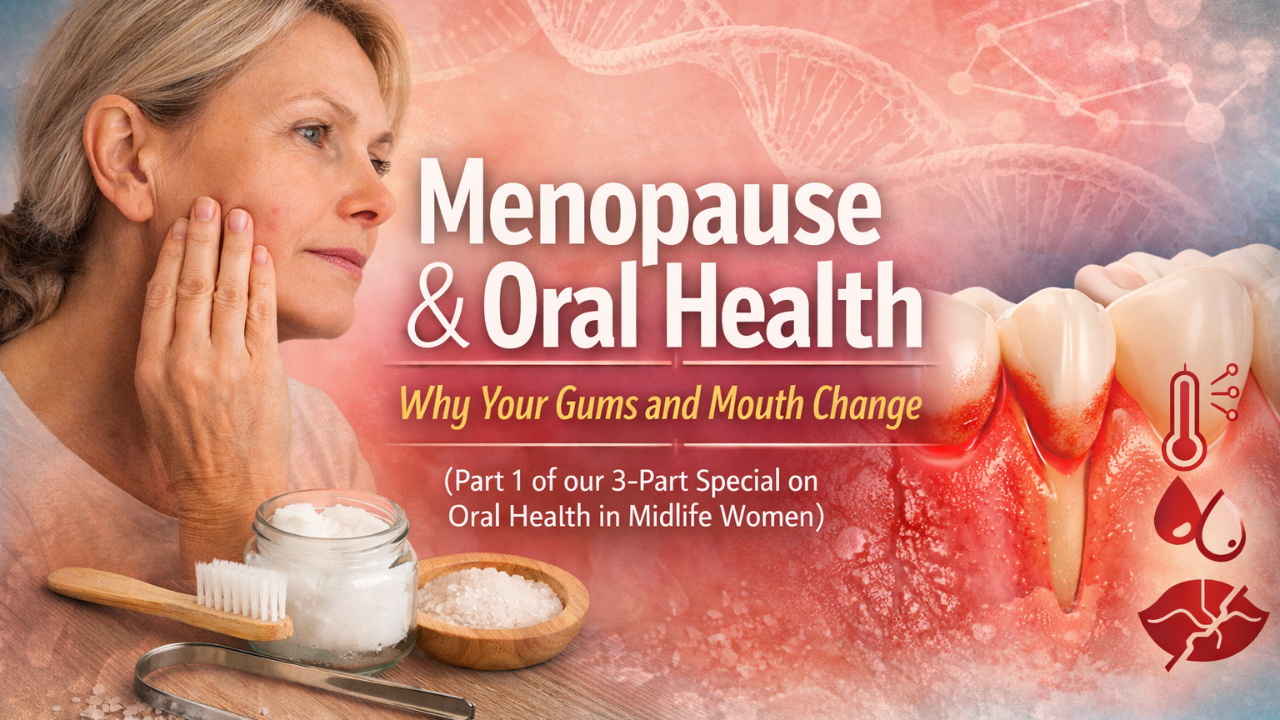
(Part 1 of our 3-Part Special on Oral Health in Midlife Women)
Most women expect hot flushes, sleep changes and mood shifts during perimenopause and menopause.
But far fewer are prepared for what can happen in their mouth.
Bleeding or sensitive gums. Dry mouth. Receding gum lines. Burning sensations. Jaw tension. Changes in taste or breath.
If this sounds familiar, you’re not alone, and it’s not “just ageing.”
These changes are often driven by hormonal shifts, particularly declining estrogen, and they deserve the same attention as any other menopause symptom.
Let’s start with what’s happening in your mouth.
Estrogen receptors exist throughout the oral cavity, including:
-
gum tissue
-
salivary glands
-
jaw bone
-
mucous membranes
As estrogen declines, several things can occur:
-
saliva production reduces
-
gum tissue becomes thinner and more reactive
-
collagen quality decreases
-
circulation to oral tissues slows
-
immune responses in the mouth shift
This creates a perfect storm for inflammation, dryness and sensitivity.
Many women are surprised when they suddenly develop oral symptoms despite maintaining good dental hygiene. But this isn’t about brushing “wrong.”
It’s about a changing internal environment.
Just like vaginal tissue becomes drier and less elastic during menopause, oral tissues are affected in similar ways.
Common Oral Changes During Perimenopause and Menopause
You may notice:
Dry Mouth (Xerostomia)
Saliva is your mouth’s natural protection system. It:
-
neutralises acids
-
washes away bacteria
-
protects enamel
-
supports gum healing
When saliva drops, you become more prone to:
-
cavities
-
gum irritation
-
bad breath
-
burning sensations
-
altered taste
Dry mouth is one of the most common menopausal oral complaints.
Gum Sensitivity, Bleeding or Inflammation
Hormonal shifts make gums more reactive to plaque and bacteria. Even if your routine hasn’t changed, you may experience:
-
bleeding when brushing or flossing
-
tender or swollen gums
-
redness along the gum line
Some women develop what’s referred to clinically as menopausal gingivostomatitis, where gums appear shiny, inflamed or unusually sensitive.
Receding Gums and Jaw Bone Changes
Estrogen also supports bone density. As levels fall, this can affect the jaw just as it affects hips or spine.
This may contribute to:
-
gum recession
-
tooth sensitivity
-
increased risk of periodontal disease
-
changes in bite or jaw comfort
Burning Mouth or Taste Changes
Some women experience:
-
burning sensations on the tongue or gums
-
metallic or altered taste
These symptoms are thought to be linked to hormonal changes, nerve sensitivity and reduced salivary flow.
The good news is there’s a lot you can do to gently support your oral tissues during this transition.
Simple Daily Foundations (We’ll Go Deeper in Part 2)
For now, start with these basics:
-
gentle brushing twice daily
-
flossing every day
-
tongue scraping daily
-
regular oil pulling
- warm salt-water gargles (once daily or during flare-ups to soothe gums, reduce oral bacteria and calm inflammation)
If you’d like help supporting your menopause symptoms holistically, from oral health to hormones, energy and pelvic wellbeing, this is exactly the kind of whole-body approach we take inside Menopause Natural Solutions.
You don’t have to navigate these changes alone.
Click here to learn about consulting with us.
Coming Up in This 3-Part Oral Health Series
Part 2: The Mouth–Uterus Connection — How Oral Health Influences Pelvic Wellness
Part 3: Jaw, Fascia & Pelvic Floor — The Hidden Tension Pattern of Menopause
Author

Jennifer Harrington
Clinical Director
Menopause Specialist, Naturopath, Nutritionist, Medical Herbalist
Stay connected with news and updates!
Recent Posts
