
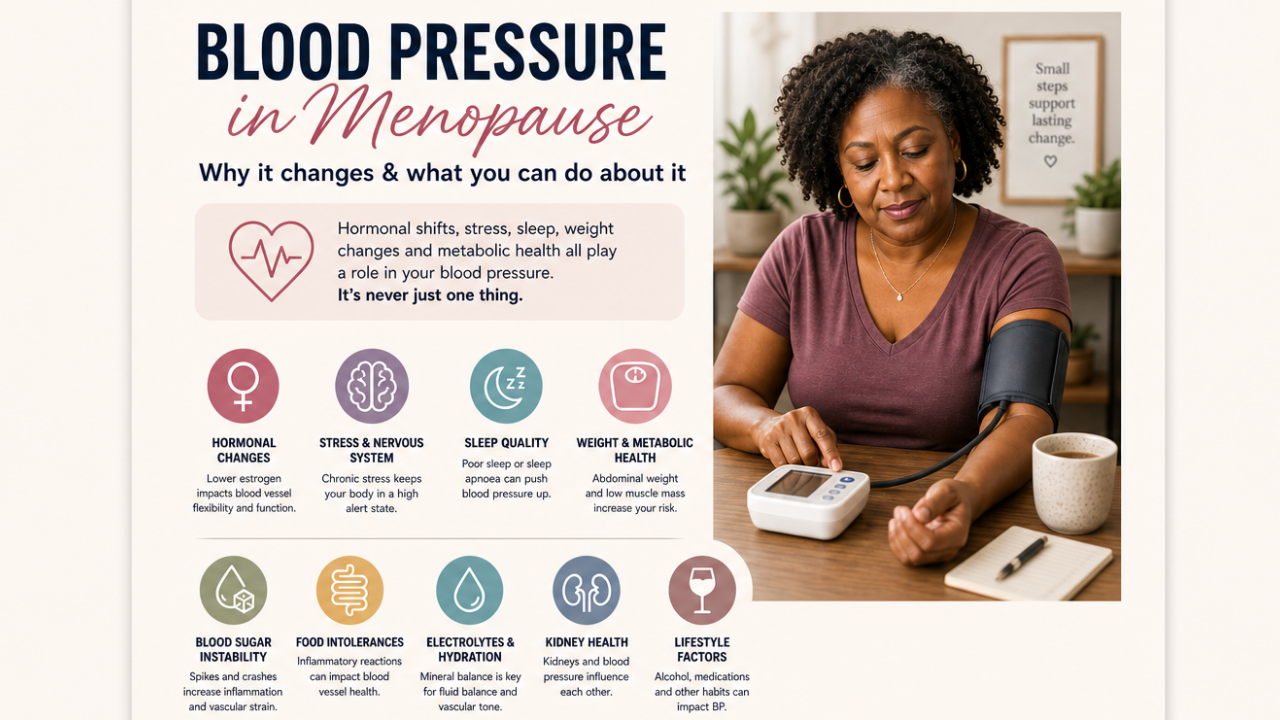
Blood Pressure in Menopause: Why It Changes & What You Can Do About It
“My blood pressure has suddenly gone up… why?”
This is something I’m hearing more and more in clinic.
Women who have never had an issue with blood pressure suddenly notice their readings creeping up. Sometimes they’re told to “keep an eye on it,” and other times they’re started on medication seemingly out of nowhere.
And the question is almost always the same:
“Is this just menopause?”
The answer is partly yes… but not entirely.
What happens to blood pressure in menopause?
During the menopausal transition, it’s very common for blood pressure to rise. This isn’t random. It reflects a shift happening across multiple systems in the body.
One of the key changes is the decline in oestrogen. Oestrogen plays a protective role in the cardiovascular system. It helps keep blood vessels flexible, supports nitric oxide production so vessels can relax, and helps regulate inflammation. As levels decline, vessels can become less flexible and more reactive, which can contribute to increased pressure over time.
At the same time, the nervous system often comes under more load, and this is one of the biggest drivers I see.
Stress, the nervous system, and blood pressure
In midlife, many women are carrying a significant load. Work, family, ageing parents, hormonal changes, poor sleep, and often a constant sense of being “on.”
The body doesn’t separate emotional stress from physical stress. It responds the same way.
When the system perceives stress, it activates the sympathetic nervous system and releases stress hormones like cortisol and adrenaline. In the short term, this is helpful. But when it becomes chronic, the body stays in a more activated state.
And that has direct effects on blood pressure.
Blood vessels become more constricted, heart rate can increase, and the body shifts into a pattern where it’s constantly being pushed toward higher pressure.
What’s important to understand is that this isn’t just about feeling stressed. You can feel like you’re coping and still be running a highly activated system underneath.
This is why stress often shows up alongside poor sleep, palpitations, anxiety, fatigue, and blood sugar instability. It’s all part of the same picture.
Weight changes in menopause and blood pressure
This is one of the biggest drivers, and it often doesn’t get explained clearly enough.
Many women notice that their weight starts to shift in midlife, particularly around the abdomen. And often, this feels like it’s happening despite doing all the same things that used to work.
This isn’t just about calories or willpower. It reflects deeper metabolic and hormonal changes.
As oestrogen declines, the body becomes more prone to central fat storage and changes in insulin sensitivity. At the same time, muscle mass can decline, which further impacts how the body handles blood sugar and energy.
And this type of weight gain is metabolically active.
It can increase inflammation, affect blood vessel function, and place more load on the cardiovascular system. Over time, this becomes a significant driver of rising blood pressure.
This is why blood pressure, weight changes, blood sugar, and even palpitations often show up together during menopause. They’re all part of the same underlying picture.
Blood vessels, inflammation, and why this matters
One piece that is often missed is what’s happening at the level of the blood vessels themselves.
The inner lining of your blood vessels, known as the endothelium, plays a key role in regulating blood pressure. It helps vessels relax, respond to signals, and maintain healthy circulation.
In midlife, a combination of hormonal changes, stress, blood sugar instability, and inflammation can affect how well this system functions.
When the endothelium is under strain, blood vessels are more likely to constrict and less able to relax effectively. Over time, this contributes to rising blood pressure.
This is why supporting inflammation, nutrition, and overall metabolic health is so important. You’re not just treating a number, you’re supporting the function of the system itself.
Sleep and overnight regulation
Sleep is another major piece of the puzzle.
When sleep is disrupted, the body loses an important window for repair, hormone regulation, and nervous system reset.
And if sleep apnoea is present, even if it hasn’t been diagnosed, oxygen levels can drop overnight. This triggers adrenaline, increases heart rate, and pushes blood pressure higher.
This often shows up as higher morning readings, fatigue, anxiety, or even palpitations on waking.
Blood sugar and metabolic health
Blood sugar instability doesn’t just affect energy. It has a direct impact on vascular function, inflammation, and fluid balance.
When blood sugar drops or fluctuates, the body releases stress hormones to compensate. Over time, this contributes to a more activated system and increased pressure.
Insulin resistance, which becomes more common in midlife, is strongly linked to elevated blood pressure.
What about food intolerances?
This is something that doesn’t get talked about enough.
From a conventional perspective, food intolerances aren’t usually linked directly to blood pressure. But clinically, I do see patterns.
I’ve had patients remove a food they don’t tolerate well, gluten being a common example, and notice not just improvements in digestion or energy, but also a shift in their blood pressure.
When the body is regularly exposed to a food it reacts to, even subtly, it can create a low-grade inflammatory response. That inflammation can influence the immune system, the nervous system, and the blood vessels themselves.
Over time, this can affect how the body regulates pressure.
Do I see this in everyone? No.
But I see it enough that it’s worth considering, especially if blood pressure changes are happening alongside bloating, skin issues, fatigue, or brain fog.
Electrolytes, hydration, and alcohol
Electrolytes like magnesium, potassium and sodium play a key role in fluid balance, nerve signalling, and vascular tone.
In midlife, depletion often builds quietly. It’s rarely just one thing, more often it’s the cumulative effect of stress, nutrition, caffeine, alcohol, medications, and hydration patterns.
Alcohol deserves a mention here. Many women notice their tolerance changes in midlife. Even small amounts can impact sleep, blood sugar, and nervous system regulation, all of which can influence blood pressure.
It’s not always as simple as reducing salt. It’s about balance, context, and supporting the body with the minerals it actually needs.
Even subtle imbalances can make a difference.
Kidney health and blood pressure
The kidneys play a central role in regulating blood pressure. They help control fluid balance, electrolyte levels, and hormonal signals that influence how blood vessels constrict and relax.
This relationship goes both ways.
When blood pressure is elevated over time, it can place strain on the kidneys. And when kidney function is not optimal, even subtly, it can contribute to rising blood pressure.
This is another reason why hydration, electrolytes, and overall metabolic health matter so much.
Blood pressure is not just a cardiovascular issue. It’s part of a broader regulatory system involving the kidneys, the nervous system, and the metabolic system.
If you would like to learn more about Kidney health - Supporting Kidney Health through Menopause
A pattern I often see in clinic
Blood pressure doesn’t usually rise on its own.
It often sits alongside poor sleep, fatigue, palpitations, anxiety, weight changes, and blood sugar instability.
When you step back and look at the full picture, it starts to make much more sense.
What can you do to support healthy blood pressure?
This is where we shift from understanding to support.
Supporting blood vessels starts with the basics. Nutrient-dense, antioxidant-rich foods and regular movement help maintain vascular health.
Building and maintaining muscle mass becomes increasingly important in midlife, as it supports metabolic health and blood sugar regulation.
The nervous system needs attention too. Creating space for recovery, reducing overstimulation, and allowing the body to come out of that constant “on” state can help regulate pressure over time.
Sleep should be prioritised. If it’s disrupted, it’s worth addressing properly. And if symptoms suggest sleep apnoea, it’s something that should be investigated.
Blood sugar stability is foundational. Eating regularly and including protein in meals helps reduce internal stress signals.
And then there are electrolytes. Supporting mineral balance can have a meaningful impact on fluid balance, heart rhythm, and blood pressure regulation.
In some cases, medications or existing health conditions may also play a role, which is why it’s important to look at the full picture.
Because blood pressure is rarely the problem in isolation.
It’s a signal.
When should you take it seriously?
Always.
Even mild elevations are worth understanding early, particularly if they are consistent or accompanied by other symptoms.
Early awareness and support can make a significant difference long term.
Final thought
Blood pressure changes in menopause are common.
But they are not inevitable.
And they are not something to ignore or simply manage in isolation.
When you understand the drivers and support the body as a whole, you create the opportunity for real, lasting change.
Need support?
If your blood pressure has changed and you’re not sure why, this is exactly the work I do.
We look at your hormones, sleep, nervous system, metabolic health, and where appropriate, use functional testing to understand what’s driving things.
From there, we build a personalised plan based on your body.
You can book a consultation to explore your next steps.
Author

Jennifer Harrington
Clinical Director
Menopause Specialist, Naturopath, Nutritionist, Medical Herbalist
Stay connected with news and updates!
Recent Posts
