
Heart Palpitations in Peri-menopause: What They Mean & When to Look Deeper
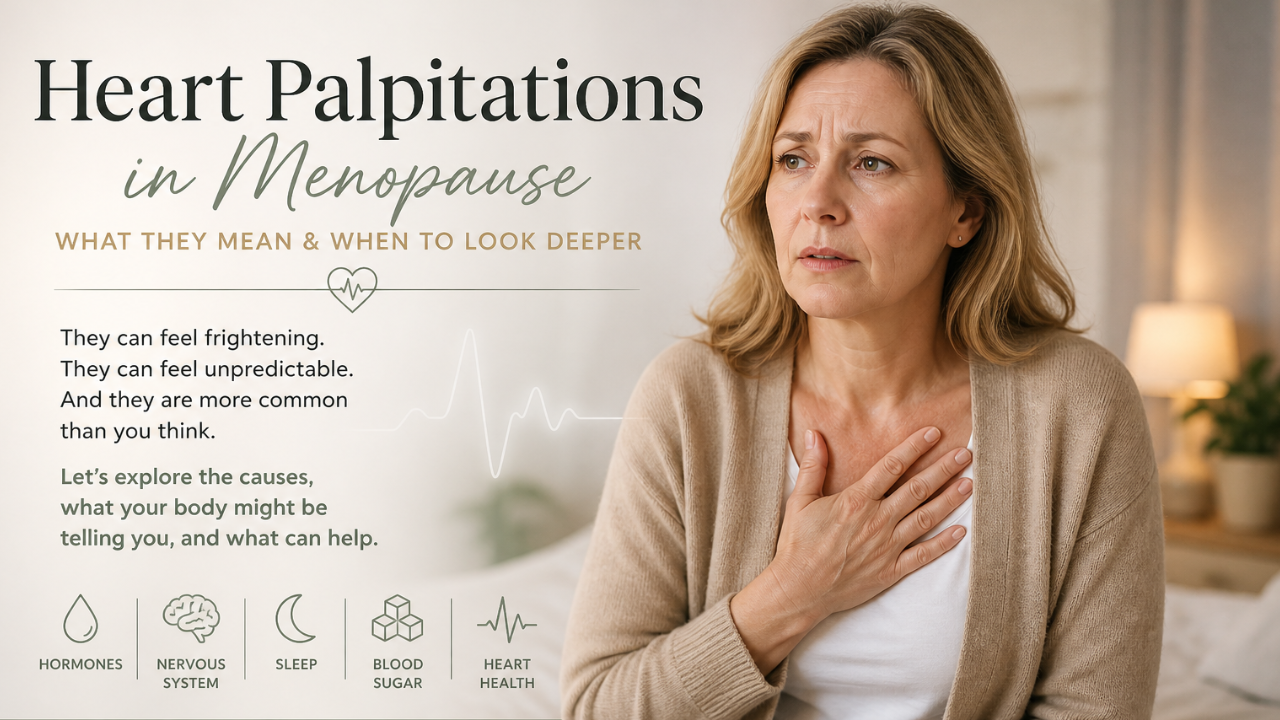
Why am I suddenly feeling my heart race?
If you’re in your 40s or 50s and noticing your heart pounding, fluttering, skipping or racing…
you’re not imagining it.
Heart palpitations are one of the most common, and often most unsettling, symptoms I see in perimenopause and menopause.
For some women, it feels like:
- A sudden racing heart out of nowhere
- A fluttering or “flip-flop” sensation in the chest
- A pounding heartbeat, especially at night
- A surge of adrenaline or anxiety alongside it
And understandably… it can feel frightening.
But here’s what I want you to know first:
Palpitations are common in menopause.
But they are not something to ignore.
What causes heart palpitations in menopause?
This is where it gets interesting, and important.
Because while hormones play a role, palpitations are rarely just “hormonal.”
1. Declining oestrogen
Oestrogen has a direct effect on:
- Blood vessel function
- Nervous system regulation
- Heart rhythm stability
As levels fluctuate and decline, the cardiovascular system becomes more sensitive, and the heart can respond more easily to stress signals.
2. Nervous system dysregulation (adrenaline surges)
Many women I see with palpitations are also experiencing:
- Anxiety
- Poor sleep
- Night waking (especially 2–4am)
- A sense of internal “wired but tired”
This is often a sympathetic nervous system dominance picture.
When the body perceives stress, whether physical, emotional, or internal, it releases adrenaline.
And adrenaline feels like:
- A racing heart
- A pounding chest
- A surge of panic
3. Blood sugar instability
This is a big one that is often missed.
When blood sugar drops overnight or between meals, the body compensates by releasing cortisol and adrenaline.
That can trigger:
- Night-time palpitations
- Early morning anxiety
- Waking with a racing heart
4. Electrolyte imbalances
The heart relies heavily on electrolytes for proper rhythm:
- Magnesium
- Potassium
- Sodium
- Calcium
In midlife, I often see electrolyte depletion building quietly in the background. It’s rarely just one thing, more often it’s the cumulative effect of ongoing stress, less-than-ideal nutrition, regular caffeine or alcohol intake, certain medications, and simply not being as well hydrated as the body needs. Over time, this combination can start to impact the delicate balance the heart relies on. And the important thing to understand is that it doesn’t have to be a major deficiency, even subtle imbalances can be enough to trigger palpitations.
5. Thyroid function
Thyroid changes become more common in this phase of life and can contribute to:
- Heart palpitations
- Anxiety
- Heat intolerance
- Sleep disruption
6. Sleep disruption & sleep apnoea
This is a major clinical pattern I see.
When breathing is disrupted during sleep:
- Oxygen levels drop
- The body releases adrenaline
- The heart rate increases suddenly
This can feel like:
- Waking in panic
- A racing or pounding heart at night
- Night sweats with palpitations
If your palpitations are waking you at night or hitting first thing in the morning, it may be worth revisiting sleep apnoea as a hidden driver, as I explored in my previous article. Sleep apnea
7. Stimulants and lifestyle factors
Common triggers include:
- Caffeine
- Alcohol
- Dehydration
- Overtraining
- High stress environments
In menopause, tolerance to these often decreases.
What do palpitations feel like?
Women describe them as:
- Fluttering
- Skipping beats
- A “thud” in the chest
- Racing or pounding
- Irregular rhythm
They may occur:
- At rest
- At night
- During stress
- After eating
- With anxiety
When should you investigate further?
This is important.
While many palpitations are benign, you should always rule out underlying issues.
Consider further investigation if:
- They are new or worsening
- They wake you from sleep
- They occur with dizziness or shortness of breath
- You feel faint or lightheaded
- There is chest pain
- You have a history of heart disease
Testing may include:
- ECG
- Holter monitor (24–72 hour heart rhythm tracking)
- Blood tests (thyroid, iron, electrolytes)
- Sleep study (if indicated)
A more functional view: What is your body telling you?
This is where I like to shift the conversation.
Palpitations are not random.
They are a signal.
A sign that something is out of balance in the system:
- Nervous system overload
- Blood sugar instability
- Electrolyte depletion
- Hormonal shifts
- Oxygen delivery issues
When we identify and address the drivers, the symptom often settles.
What can help reduce palpitations naturally?
1. Stabilise blood sugar
- Eat regular meals
- Include protein and healthy fats
- Avoid long gaps without food
2. Support electrolytes
- Trial a 7 day electrolyte challenge
- Ensure adequate hydration
3. Regulate the nervous system
- Breathwork
- Gentle movement
- Nervous system support (e.g. magnesium, herbs)
- Reducing overstimulation
4. Improve sleep quality
- Address night waking
- Consider sleep apnoea if symptoms fit
- Support circadian rhythm
5. Review stimulants
- Trial reducing caffeine and alcohol
- Assess timing (especially afternoon/evening intake)
6. Investigate underlying drivers
This is key.
Because without understanding the “why,” symptoms tend to persist.
Final thought
Heart palpitations in menopause are common.
But they are not something to dismiss as “just hormones.”
They are your body asking for attention.
And when you listen and investigate properly you often uncover the deeper drivers that, once addressed, can improve not just your heart, but your sleep, energy, mood, and overall resilience.
Need help getting to the root cause?
If you’re experiencing palpitations and not sure what’s driving them, this is exactly the work I do.
Together, we look at:
- Hormones
- Nervous system
- Sleep
- Blood sugar
- Functional testing where needed
And create a personalised plan based on your body.
You can book a consultation to explore what’s going on and your next steps.
Author

Jennifer Harrington
Clinical Director
Menopause Specialist, Naturopath, Nutritionist, Medical Herbalist
Stay connected with news and updates!
Recent Posts
