
Breast Pain in Menopause: Causes, What It Means & How to Find Relief
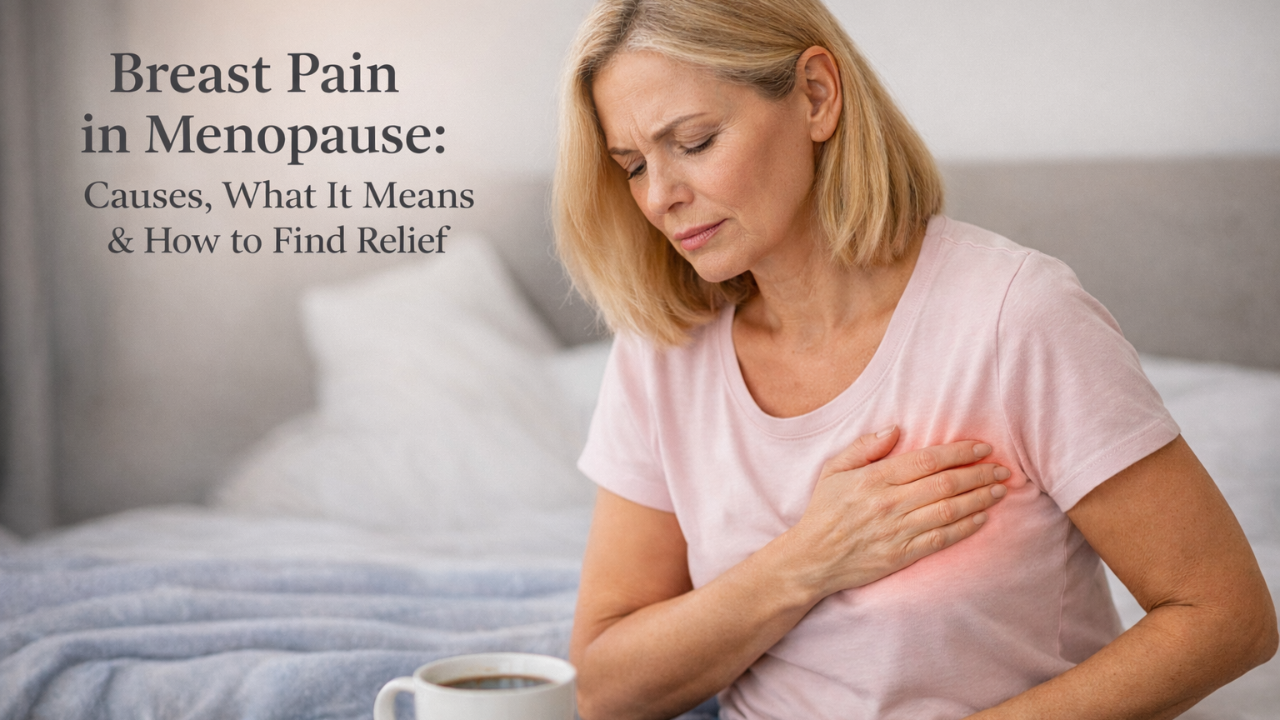
Breast pain isn’t something most women expect when entering menopause.
Hot flushes? Yes.
Sleep disruption? Of course.
But tender, swollen, or even sharp, shooting breast pain?
That can feel confusing, and sometimes worrying.
The reassuring part is this, in most cases, breast pain in midlife is not dangerous. But it is meaningful.
It’s your body signalling that something within your hormonal, metabolic, or cellular environment needs support.
What Does Menopausal Breast Pain Feel Like?
Every woman experiences it differently.
You might notice a sense of fullness or heaviness, tenderness to touch, or a lumpy, uneven texture. Some women describe sharp, electric “zinger” pains that travel toward the nipple, while others experience a dull, persistent ache.
It may affect one breast or both, and it can come and go, or linger.
Why Does Breast Pain Happen in Menopause?
Breast pain is often blamed on hormones, but that’s only part of the picture.
In clinical practice, it’s usually a combination of hormonal fluctuations, inflammation, lymphatic congestion, nervous system sensitivity, metabolic influences, and detoxification factors.
Let’s unpack the key drivers.
Hormonal Fluctuations: It’s the Imbalance
During perimenopause, hormones don’t simply decline, they fluctuate.
Oestrogen can rise and fall unpredictably, while progesterone tends to decline earlier. This creates a relative oestrogen dominance, which can lead to fluid retention, increased sensitivity, and changes in breast tissue.
Prolactin, even mild elevations in prolactin can increase breast tenderness, fullness, and sensitivity. This may be influenced by nipple stimulation, stress, sleep disruption, medications, or thyroid function.
Fibrocystic Breast Changes
Fibrocystic changes are very common in midlife.
These include lumpy or rope-like tissue, small fluid-filled cysts, and fluctuating tenderness. They are benign, but they can be uncomfortable, especially when hormone balance, detoxification, and inflammation are not well supported.
Lymphatic Congestion
The breasts rely heavily on lymphatic flow to clear fluid and waste.
Unlike the circulatory system, the lymphatic system doesn’t have a pump, it depends on movement, breathing, and muscle activity.
When flow slows, fluid can build up in breast tissue, leading to swelling, heaviness, and tenderness.
Nervous System Sensitivity
Not all breast pain is structural.
Sharp, burning, or “zinging” pain often has a neurological component. Stress, poor sleep, and nervous system dysregulation can amplify how pain is perceived.
In these cases, the issue isn’t just the tissue, it’s how the body is processing signals.
Liver and Oestrogen Clearance
Your liver plays a key role in metabolising and clearing oestrogen.
If this process is sluggish, oestrogen can recirculate, continuing to stimulate breast tissue.
Factors that can impact this include alcohol, environmental toxins, and gut imbalances.
Musculoskeletal and Referred Pain
Not all breast pain originates in the breast itself.
Pain can be referred from the ribs, chest wall, or thoracic spine, particularly with rib joint irritation, tight pectoral muscles, or intercostal nerve sensitivity.
This is more likely if the pain is one-sided, changes with movement or posture, or can be reproduced with pressure on the area.
Key Nutrient Deficiencies
Breast tissue is nutrient-sensitive.
Low levels of certain nutrients may increase tenderness and inflammation, including iodine, vitamin B6, magnesium, and essential fatty acids.
Low iodine levels have been associated with fibrocystic changes, increased tenderness, and reduced regulation of oestrogen signalling.
Vitamin B6 supports progesterone balance and helps regulate prolactin. Magnesium calms the nervous system and reduces pain sensitivity. Essential fatty acids support cell membrane health and help regulate inflammation.
Blood Sugar and Breast Pain: An Under-Recognised Link
Blood sugar balance plays a significant role in hormonal health.
When blood glucose and insulin levels are unstable, this can increase inflammation, disrupt oestrogen signalling, and promote fluid retention.
Over time, high sugar intake and insulin resistance can also contribute to connective tissue changes and increased sensitivity within breast tissue.
Clinically, I often see breast pain improve when blood sugar is stabilised.
Caffeine
For some women, caffeine increases breast tenderness, particularly where fibrocystic changes are present.
It may heighten nervous system sensitivity, increase fluid retention, and impact sleep and stress hormones.
A simple two to four week break can help identify if it’s a trigger.
Smoking
Smoking affects circulation, inflammation, and detoxification.
It can reduce oxygen delivery to tissue, increase oxidative stress, and disrupt hormone metabolism. This creates an environment where breast tissue becomes more reactive and slower to heal.
Simple Lifestyle Strategies to Soothe Breast Pain
While addressing root causes is essential, there are also practical ways to relieve discomfort.
Warm Compresses
Warmth helps improve circulation and relax tissue.
A warm compress for ten to fifteen minutes can ease that heavy, aching sensation.
Lymphatic Support
Gentle lymphatic massage, movement, and stretching can help reduce fluid build-up and tenderness.
Supportive Bras and Movement
Wearing a well-fitted, non-restrictive bra and incorporating daily movement, such as walking or light stretching, can improve comfort and support lymphatic flow.
Nervous System Support
Magnesium, breathwork, and quality sleep can help reduce pain sensitivity, especially where symptoms feel sharp or burning.
When Should You Get It Checked?
Always investigate if you notice a new or persistent lump, skin dimpling or puckering, nipple inversion or discharge, or ongoing one-sided pain.
The Bigger Picture
Breast pain in menopause is rarely just about the breast.
It reflects hormonal signalling, inflammation, nutrient status, blood sugar balance, nervous system tone, and lymphatic flow.
When these systems are supported, symptoms often improve, sometimes quite quickly.
Final Thoughts
If you’re experiencing breast pain during menopause, your body isn’t failing, it’s communicating.
And when we listen and respond at a deeper, root-cause level, relief is not only possible, it’s expected.
Ready to Understand What’s Driving Your Symptoms?
If you’d like a personalised, root-cause approach, you can book a consultation and explore what your body needs right now.
Author

Jennifer Harrington
Clinical Director
Menopause Specialist, Naturopath, Nutritionist, Medical Herbalist
Stay connected with news and updates!
Recent Posts
