
Foot Pain in Menopause: Causes of Plantar Fasciitis, Arch Collapse and Burning Feet
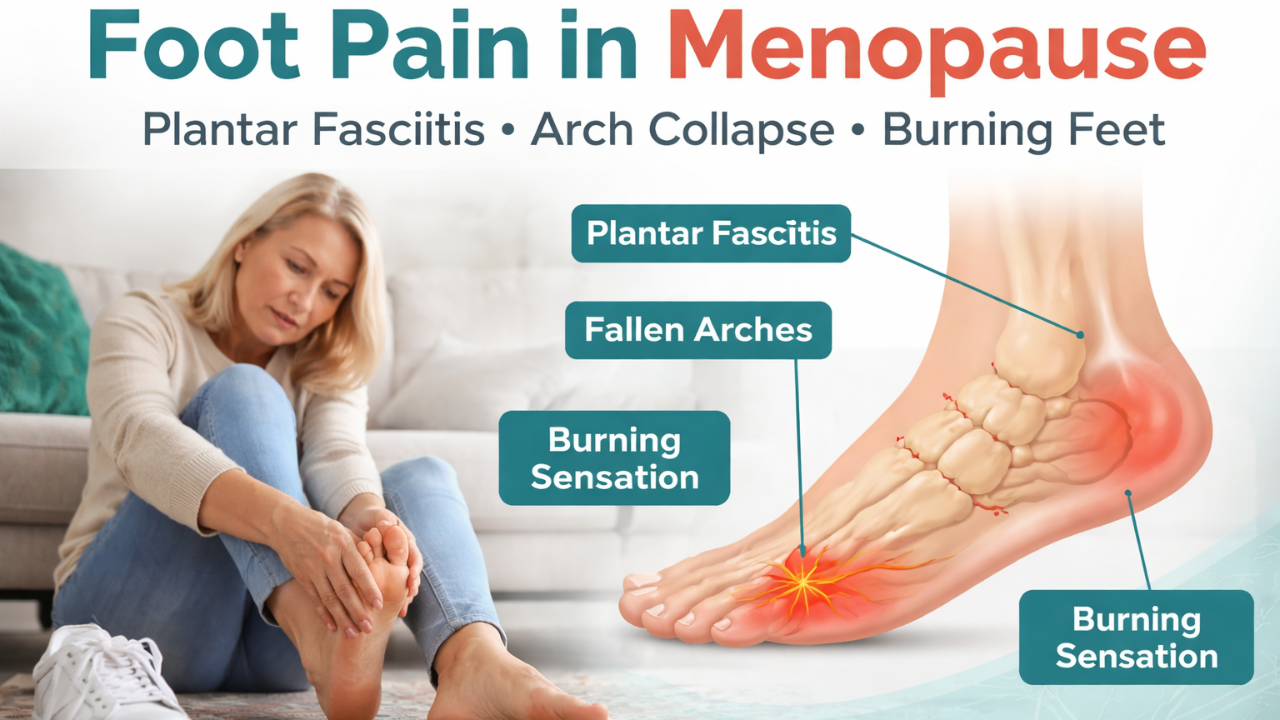
Naturopath Jennifer Harrington explains why your feet start changing in midlife, and what it really means.
Have your feet suddenly started complaining… seemingly out of nowhere?
That sharp pain when you take your first steps in the morning.
Aching arches by the end of the day.
Burning or tingling sensations, especially at night.
Or a feeling like your feet are flattening or changing shape.
If this sounds familiar, you’re not imagining it. And it’s not just “getting older.”
For many women, foot pain begins or worsens during the menopausal transition, and once you understand why, it starts to make a lot more sense.
Why does foot pain increase during menopause?
Most women don’t connect their feet with their hormones, but they should.
As oestrogen declines, it affects far more than your cycle or mood. It changes how your body maintains and repairs tissue.
This is where things begin to shift.
What’s really happening beneath the surface
Menopause is not just a hormonal transition. It’s a cellular one.
Oestrogen plays a key role in maintaining collagen, hydration and elasticity within your connective tissue. As levels decline, tissues like the plantar fascia, ligaments and tendons become less resilient.
They don’t tolerate load the same way they used to.
They don’t repair as quickly.
And small stresses that were once handled easily can start to show up as pain.
Because your feet carry you all day, every day, they’re often one of the first places this becomes noticeable.
The foot patterns I commonly see in midlife
Plantar fasciitis
That sharp heel pain when you take your first steps in the morning is one of the most common presentations.
As the plantar fascia loses elasticity and is placed under more strain, it becomes more prone to irritation and microtearing.
Arch collapse or “flattening” feet
Many women tell me their shoes no longer fit the same.
Their feet feel wider. Less supported. More fatigued.
This often reflects subtle changes in ligament support and tendon strength, which can alter how weight is distributed through the foot.
Burning feet, tingling or nerve pain
This is the one that often surprises people.
Some women notice their feet feel hot at night. Others describe tingling, pins and needles, or a burning sensation through the soles.
Sometimes it’s labelled as Morton’s neuroma. Sometimes it’s not.
Structurally, as the arch lowers and load shifts forward, the small nerves in the forefoot can become irritated.
But this is where we need to zoom out.
Because burning feet are not always just a structural issue.
They can also reflect changes in:
- circulation
- inflammation
- blood sugar regulation
- nervous system sensitivity
This is why many women notice it more at night, or when they’re run down.
It’s often a sign that the nervous system and metabolic environment need support, not just the foot itself.
Why this isn’t just a foot problem
This is the piece I think is most often missed.
Foot pain in menopause is not just about mechanics. It’s about how well your body is functioning overall.
When metabolic health shifts, whether that’s blood sugar, inflammation, nutrient status or mitochondrial energy, your tissues don’t repair or tolerate load as well.
So when someone tells me they have plantar fasciitis, I don’t just look at the foot.
I ask:
Why is this tissue no longer coping?
What actually helps
Once you understand what’s driving it, the approach becomes much clearer.
Yes, we support the foot, through strength, footwear and load management.
But we also support the body.
Improving protein intake, reducing inflammation, supporting circulation and stabilising blood sugar can all make a meaningful difference to how your tissues behave and recover.
Because your feet are not separate from the rest of your physiology.
They are responding to it.
The bigger message
If your feet have started to change, it doesn’t mean your body is breaking down.
It means your body is adapting, and asking for a different kind of support.
Menopause is a shift in how your body maintains, repairs and distributes energy.
And your feet are often one of the first places that message shows up.
When should you seek support?
If pain is persisting, changing, or starting to affect how you move, it’s worth looking deeper.
Because the earlier you understand what’s driving it, the easier it is to shift.
Frequently Asked Questions About Foot Pain in Menopause
Can menopause cause foot pain?
Yes. Hormonal changes in menopause can reduce collagen, tissue elasticity and repair capacity, increasing the risk of foot pain.
Many women notice new or worsening foot pain during the menopausal transition. As oestrogen declines, connective tissues like the plantar fascia, ligaments and tendons don’t tolerate load as well and are more prone to irritation.
This is why conditions like plantar fasciitis, arch discomfort and general foot fatigue often appear during this time.
Why do my feet burn at night during menopause?
Burning feet at night during menopause are often linked to changes in circulation, inflammation, blood sugar balance and nervous system sensitivity.
While it can sometimes be mechanical, this symptom often reflects deeper shifts in how the body is regulating itself. These changes can make nerve endings more reactive particularly at night when your body is trying to rest and repair.
If your feet feel hot, tingly or uncomfortable in the evenings, it’s worth looking beyond just the structure of the foot.
Can menopause cause plantar fasciitis?
Menopause can increase the risk of plantar fasciitis by reducing tissue elasticity and slowing repair.
As connective tissue becomes less resilient, the plantar fascia is placed under greater strain, especially if foot mechanics are also changing.
This is why many women develop heel pain during midlife, even if they’ve never had foot issues before.
Do your feet change shape during menopause?
Yes. Hormonal changes can lead to ligament laxity and reduced support, causing the arches to lower and feet to widen.
Many women notice their shoes no longer fit the same. As the arch subtly drops, weight distribution changes, which can lead to discomfort, fatigue and increased pressure through the foot.
You don’t have to figure this out on your own
If you’re dealing with new or worsening symptoms in midlife and you’re not sure what’s driving them, this is exactly what I help women unpack.
Together, we look at your symptoms, your underlying drivers, and what your body needs now.
So you can move from managing symptoms to actually improving how your body functions.
Looking for Personalised Support?
If you're ready to take a more personalised approach to your health during perimenopause, menopause or beyond, explore my naturopathic consultation options and learn how we can work together.
Author

Jennifer Harrington
Clinical Director
Menopause Specialist, Naturopath, Nutritionist, Medical Herbalist
Stay connected with news and updates!
Recent Posts
