
The Mouth–Uterus Connection
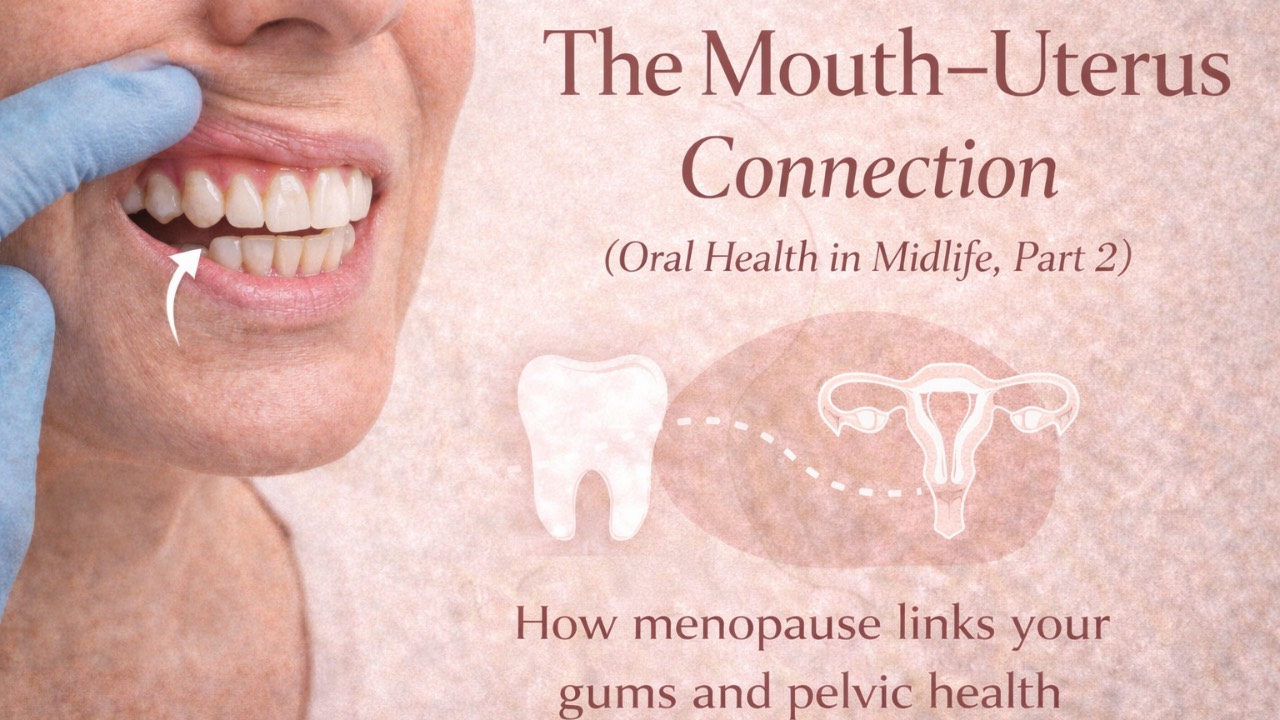
(Part 2 of our 3-Part Special on Oral Health in Midlife Women)
In Part 1 of this series, we explored how menopause affects your gums, saliva and oral tissues, and why symptoms like dry mouth, bleeding gums and jaw tension are often hormonally driven.
But many women are left wondering:
Why would my mouth have anything to do with my uterus?
The answer lies in biology — not coincidence.
Your Mouth and Uterus Are Biologically Linked
Your mouth isn’t just where digestion begins.
It’s part of a much larger system of tissues known as the mucous membrane network, which includes the digestive tract, vagina and uterus. These tissues are designed to communicate with each other through immune signals, inflammatory pathways and hormones.
From early embryonic development, the mouth, vagina and uterus arise from the same foundational tissue layer. This shared origin helps explain why these areas behave similarly throughout life, especially during hormonal transitions like menopause.
In simple terms, tissues that develop together tend to respond together.
That’s why changes in estrogen don’t just affect vaginal tissue. They can also show up in the mouth.
Why Estrogen Matters to Mucous Membranes
Estrogen plays a key role in maintaining the health of mucous membranes throughout the body. It supports tissue thickness, collagen quality, moisture levels, circulation and immune balance.
As estrogen begins to decline during perimenopause and menopause, these tissues become more vulnerable. They may thin, dry, inflame more easily or heal more slowly.
This is why many women notice patterns such as dry mouth alongside vaginal dryness, gum sensitivity appearing at the same time as bladder irritation, or oral burning occurring alongside pelvic discomfort.
These symptoms are not random. They are different expressions of the same internal shift.
Menopause isn’t just a hormonal transition — it’s a tissue transition.
Oral Inflammation Doesn’t Stay in the Mouth
Another important piece of this puzzle is inflammation.
When gum tissue is chronically irritated or inflamed, inflammatory messengers can enter the bloodstream and contribute to overall inflammatory load. Oral bacteria can also move beyond the mouth and influence distant tissues, including those in the pelvis.
In clinic, we often see women with ongoing oral issues also experiencing pelvic heaviness, bladder sensitivity, uterine congestion or inflammatory patterns such as fibroids or endometriosis.
This doesn’t mean oral health is the sole cause of pelvic symptoms, but it can absolutely be a contributing factor.
In naturopathic medicine, we’re always asking: where is inflammation entering the system?
The mouth is one of the most common, and most overlooked, entry points.
A Pattern That Shows Up Again and Again
Many midlife women present with a combination of dry mouth or gum irritation, vaginal dryness, bladder sensitivity and low-grade pelvic discomfort.
These symptoms are usually addressed separately.
But when viewed together, they tell a much clearer story: declining estrogen, compromised mucous membranes and connective tissue vulnerability.
This is why supporting oral health can create ripple effects throughout the pelvis, and why pelvic symptoms may appear alongside changes in the mouth.
The body is not compartmentalised. It’s integrated.
Supporting the Mouth–Uterus Axis Naturally
A naturopathic approach focuses on restoring tissue integrity, circulation and immune balance, rather than chasing isolated symptoms.
Supporting oral health with gentle daily foundations such as brushing, flossing, tongue scraping, oil pulling, warm salt-water gargles and adequate hydration helps calm inflammation at one of the body’s main entry points.
From there, we look deeper at nourishing mucous membranes through nutrition, particularly essential fatty acids to support tissue moisture, vitamin A and C for epithelial and collagen health, and zinc for immune resilience. A food-first approach, supported by practitioner guidance, can make a meaningful difference.
CoQ10 is also an important consideration, particularly for gum health. Levels of CoQ10 naturally decline with age, and research has shown that low CoQ10 status is associated with periodontal inflammation. CoQ10 supports cellular energy production, circulation and tissue repair, all of which are critical for maintaining healthy gums and supporting healing in estrogen-sensitive tissues.
Circulation and nervous system tone matter too. Gentle daily movement, pelvic mobility, diaphragmatic breathing and jaw relaxation all help improve blood flow to both oral and pelvic tissues while reducing inflammatory signalling.
Small, consistent practices add up.
Why This Matters in Midlife
Menopause isn’t just about managing symptoms.
It’s about how your tissues adapt to a new hormonal environment.
Your mouth often offers early clues about mucous membrane health, immune balance and pelvic resilience. When we pay attention to those signals, we can intervene earlier — and more holistically.
Coming Up in Part 3
In Part 3, we’ll explore another key piece of this puzzle: the jaw–pelvic floor fascia connection.
We’ll look at why jaw tension and pelvic holding often appear together in midlife, how menopause affects fascial elasticity, and simple ways to gently release this tension pattern.
Author

Jennifer Harrington
Clinical Director
Menopause Specialist, Naturopath, Nutritionist, Medical Herbalist
Stay connected with news and updates!
Recent Posts
