
Burning Sensations During Menopause: Why Do I Feel Like I’m Burning?
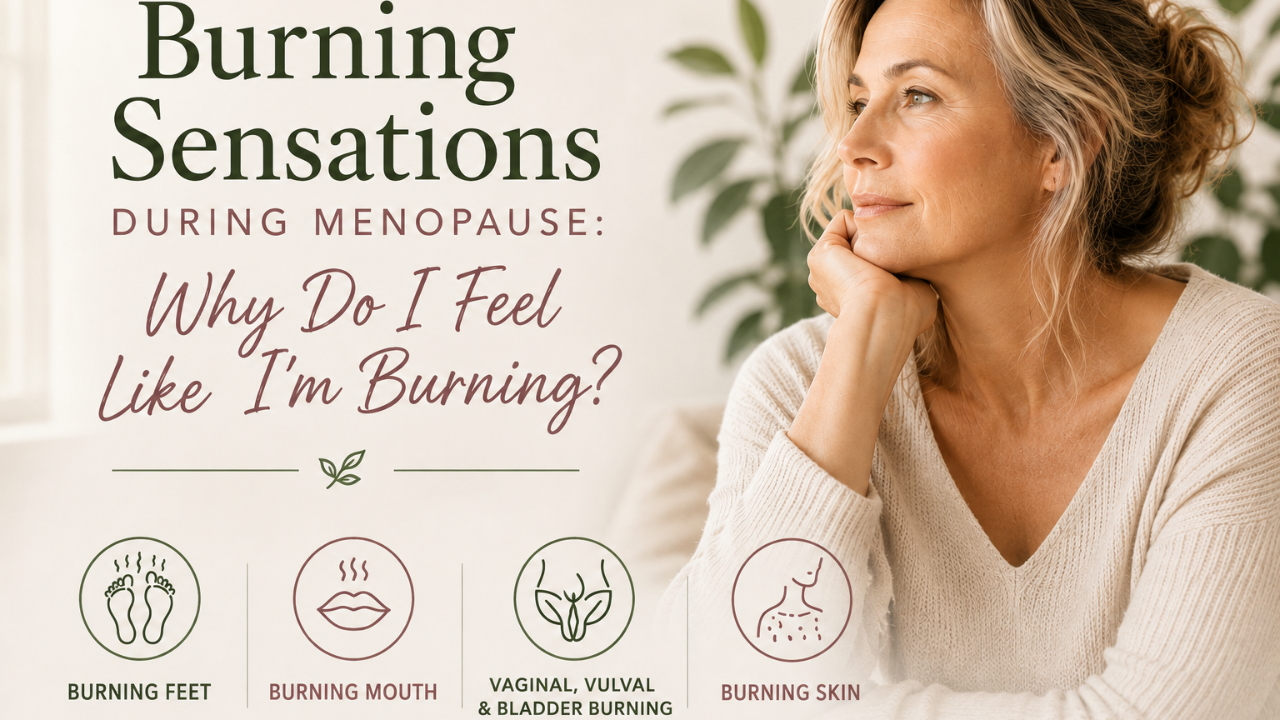
Hot flushes are probably the best-known heat-related symptom of menopause.
But what if what you're experiencing doesn't feel like a hot flush?
Perhaps your feet burn at night. Your mouth or tongue feels like you've scalded it. Your skin feels sunburnt even though it looks completely normal. Or you're experiencing burning around the vulva, vagina or bladder.
These symptoms can be confusing, uncomfortable and sometimes difficult to explain.
And yes, they can appear during perimenopause and menopause.
But there's an important distinction to make:
Menopause may contribute to burning sensations, but that doesn't mean every burning sensation is caused by menopause.
Where the burning occurs — and what comes with it — can provide important clues about what's actually going on.
Why can burning sensations appear during menopause?
Oestrogen receptors are found throughout the body, including the brain, nervous system, skin, blood vessels, urinary tract and genital tissues.
So when oestrogen starts fluctuating during perimenopause and eventually declines, its effects can extend well beyond your menstrual cycle.
Several changes may contribute to burning sensations.
Changes to the nervous system
Burning, tingling, prickling, crawling and pins and needles can all be forms of paraesthesia — unusual sensations related to sensory nerve signalling.
Oestrogen interacts with pathways involved in pain perception, temperature and sensory processing.
Changes in oestrogen may therefore alter the way some women experience touch, heat and pain.
But hormones aren't the only thing that can affect nerves.
Blood sugar problems, nutrient deficiencies, thyroid dysfunction, nerve compression, medications and peripheral neuropathy can all cause similar symptoms.
That's why the location and pattern of the burning matter.
Changes to skin and mucous membranes
Oestrogen helps maintain collagen, hydration, tissue thickness and barrier function.
As levels decline, the skin can become thinner, drier and more sensitive.
Similar changes can occur in the tissues of the vulva, vagina and urinary tract.
This may make tissues more vulnerable to irritation and can sometimes create sensations of burning, stinging or rawness.
Changes to temperature regulation
During menopause, hormonal changes affect the hypothalamus — the part of your brain involved in temperature regulation.
The body's thermoneutral zone can narrow, meaning relatively small changes in temperature can trigger an exaggerated response.
For most women, we recognise this as a hot flush.
But heat sensations aren't always experienced in exactly the same way.
Some women describe localised heat, burning skin or even the strange sensation of feeling as though they're burning internally.
Histamine and increased sensitivity
Histamine can contribute to warmth, flushing, itching, redness and burning or stinging skin.
Hormonal fluctuations may influence mast cell and histamine activity in some women, potentially contributing to increased sensitivity during perimenopause.
If burning occurs alongside flushing, hives, headaches, digestive symptoms or reactions to alcohol, foods, heat or stress, histamine may be worth considering as part of the bigger picture.
Where are you experiencing the burning?
This is one of the first questions I'd ask.
Different locations can point us towards different possibilities.
Why are my feet burning during menopause?
Feet that feel hot, burning, prickly or painful — particularly at night — shouldn't automatically be dismissed as menopause.
Peripheral nerves are an important consideration.
Blood sugar dysregulation and diabetes are well-known causes of peripheral neuropathy, but nutrient status matters too.
Vitamin B12 and thiamine (vitamin B1) deficiencies can contribute to neurological symptoms, while excessive supplemental vitamin B6 can itself cause peripheral neuropathy.
Circulation, thyroid function, alcohol intake, medications, nerve compression and conditions such as erythromelalgia may also need consideration.
Read more: Burning Feet During Menopause — Why Are My Feet So Hot?
Why does my mouth or tongue burn during menopause?
Burning mouth can feel like you've scalded your tongue or the inside of your mouth despite there being no obvious injury.
It may affect the tongue, lips, gums, palate or the entire mouth.
Hormonal changes may contribute, but burning mouth can also be associated with dry mouth, oral health changes, nutrient deficiencies, diabetes, thyroid dysfunction, medications, reflux and oral infections.
Changes to taste can sometimes occur alongside it.
Read more: Burning Mouth During Menopause — Why Does My Mouth Feel Like It's on Fire?
Why does my vagina, vulva or bladder burn during menopause?
Falling oestrogen can have a significant effect on the tissues of the vagina, vulva, urethra and bladder.
These changes are collectively known as genitourinary syndrome of menopause (GSM).
Dryness, thinning tissues and changes to the vaginal environment can contribute to burning, irritation, painful sex and urinary symptoms.
But GSM isn't the only possibility.
Urinary tract infections, changes to the vaginal microbiome, vulval skin conditions, irritation from products, pelvic floor dysfunction and nerve sensitivity may also cause burning.
Persistent symptoms — particularly bleeding after menopause, blood in the urine, sores, unusual discharge or visible vulval changes — deserve investigation.
Read more: Vaginal, Vulval and Bladder Burning During Menopause — What's Causing It?
Why does my skin feel like it's burning during menopause?
Burning skin can be particularly strange because sometimes there's absolutely nothing to see.
The skin may look completely normal while feeling hot, sunburnt, prickly or painfully sensitive.
Changes to the skin barrier may contribute, but sometimes the sensation originates from the nerves rather than the skin itself.
Small fibre neuropathy is one consideration because the small sensory nerves help detect pain and temperature.
Nutrient deficiencies, blood sugar problems, thyroid dysfunction, histamine, medications, shingles, skin conditions and nerve irritation can also contribute.
Read more: Burning Skin During Menopause — Why Does My Skin Feel Like It's on Fire?
What do these burning sensations have in common?
Although these burning sensations occur in very different parts of the body, there are some recurring themes.
Hormones are one.
But so are:
-
nervous-system function
-
blood sugar regulation
-
nutrient status
-
thyroid health
-
inflammation
-
histamine and mast cell activity
-
skin and mucosal health
-
circulation
-
medications and supplements
-
infections and microbiome changes
This is why I prefer to look at the whole picture rather than treating every new symptom as an isolated menopause problem.
What might be worth investigating?
There isn't one "burning menopause" blood test.
Testing should be guided by your symptoms, medical history and where the burning is occurring.
Depending on the individual, investigation might include:
-
B vitamin status
-
iron studies
-
blood glucose and HbA1c
-
thyroid function
-
kidney and liver function
-
medication and supplement review
-
neurological assessment
-
urine testing
-
vaginal or oral assessment where appropriate
Sometimes the most useful information comes from the pattern itself.
When did it start?
Where do you feel it?
Is it constant or intermittent?
Is it worse at night?
Does it occur alongside a hot flush?
Does alcohol, food, heat, exercise or stress trigger it?
Is there redness, a rash, discharge or another visible change?
Did it begin after starting a new medication, supplement or hormone therapy?
These details can help point you in the right direction.
Frequently asked questions about burning sensations during menopause
Can menopause cause burning sensations in the body?
Yes, hormonal changes during perimenopause and menopause may contribute to burning sensations through their effects on the nervous system, skin, mucous membranes and temperature regulation.
However, burning can have many other causes, so new or persistent symptoms shouldn't automatically be attributed to menopause.
Can menopause make your skin feel like it's burning?
Some women report burning, prickling, tingling or sunburn-like sensations despite their skin looking completely normal.
Hormonal changes may influence skin sensitivity and sensory nerve signalling, but nutrient deficiencies, blood sugar problems, thyroid dysfunction, histamine, medications and neuropathy should also be considered.
Why do my feet burn at night during menopause?
Burning feet can be related to peripheral nerve irritation, and symptoms are often more noticeable at night.
Blood sugar dysregulation, vitamin B12 or B1 deficiency, excessive vitamin B6 supplementation, thyroid dysfunction, alcohol, medications and other causes of peripheral neuropathy may need investigation.
Can menopause cause burning mouth or tongue?
Burning mouth symptoms can occur around menopause and may involve the tongue, lips, gums or entire mouth.
Hormonal changes are one possible contributor, but dry mouth, oral conditions, nutrient deficiencies, diabetes, thyroid dysfunction, reflux and medications may also play a role.
Why does my vagina or vulva burn during menopause?
Declining oestrogen can cause changes to vaginal and vulval tissues known as genitourinary syndrome of menopause (GSM).
However, infections, vaginal microbiome changes, skin conditions, irritants, pelvic floor dysfunction and nerve sensitivity can produce similar symptoms.
Can menopause cause an internal burning sensation?
Some women describe feeling unusually hot or as though they're burning internally without their skin necessarily feeling hot to touch.
Changes in temperature regulation and sensory processing may contribute, but persistent or unexplained internal burning warrants further assessment.
Can histamine cause burning skin?
Histamine can contribute to warmth, flushing, itching, redness, stinging and burning sensations.
If symptoms also occur with hives, headaches, digestive symptoms or reactions to alcohol, certain foods, heat or stress, histamine or mast cell activity may be worth considering.
Which vitamin deficiencies can cause burning or tingling?
Vitamin B12 and thiamine (vitamin B1) deficiencies can affect peripheral nerve function and contribute to burning, tingling or numbness.
Vitamin B6 is slightly different because excessive supplementation can also cause peripheral neuropathy.
Rather than assuming you need more B vitamins, your symptoms, diet, supplement intake and individual nutrient status should be considered.
When should I worry about a burning sensation?
Burning that is new, persistent, worsening or unexplained deserves assessment, particularly if accompanied by weakness, numbness, loss of coordination, severe pain, fever, a rash, sores, bleeding, urinary changes or other neurological symptoms.
When burning needs further investigation
Burning sensations shouldn't simply be ignored because you're in perimenopause or menopause.
Seek medical assessment for symptoms that are new, persistent, worsening or unexplained, particularly when accompanied by weakness, numbness, loss of coordination, significant pain, fever, a new rash, sores, unusual discharge, bleeding after menopause, blood in the urine or other neurological symptoms.
The appropriate investigation will depend very much on where the burning is occurring.
Menopause may be part of the picture — not necessarily the whole picture
One of the challenges of perimenopause is that so many things seem to change at once.
It can be tempting to explain every strange new symptom with one word:
Menopause.
Sometimes that's partly correct.
Hormonal changes can affect your nerves, skin, temperature regulation, vaginal and urinary tissues and potentially your sensitivity to histamine.
But burning sensations can also provide clues about nutrient deficiencies, blood sugar regulation, thyroid function, nerve health, infections, medications and other health issues.
So if your feet, mouth, skin, vulva, vagina or bladder feel like they're burning, don't simply accept that this is something you have to put up with as you get older.
Listen to what your body is telling you.
Menopause may provide a clue. It shouldn't stop us from asking why.
Author

Jennifer Harrington
Clinical Director
Menopause Specialist, Naturopath, Nutritionist, Medical Herbalist
Stay connected with news and updates!
Recent Posts
