
Your Brain Needs Energy: The Mitochondrial Connection
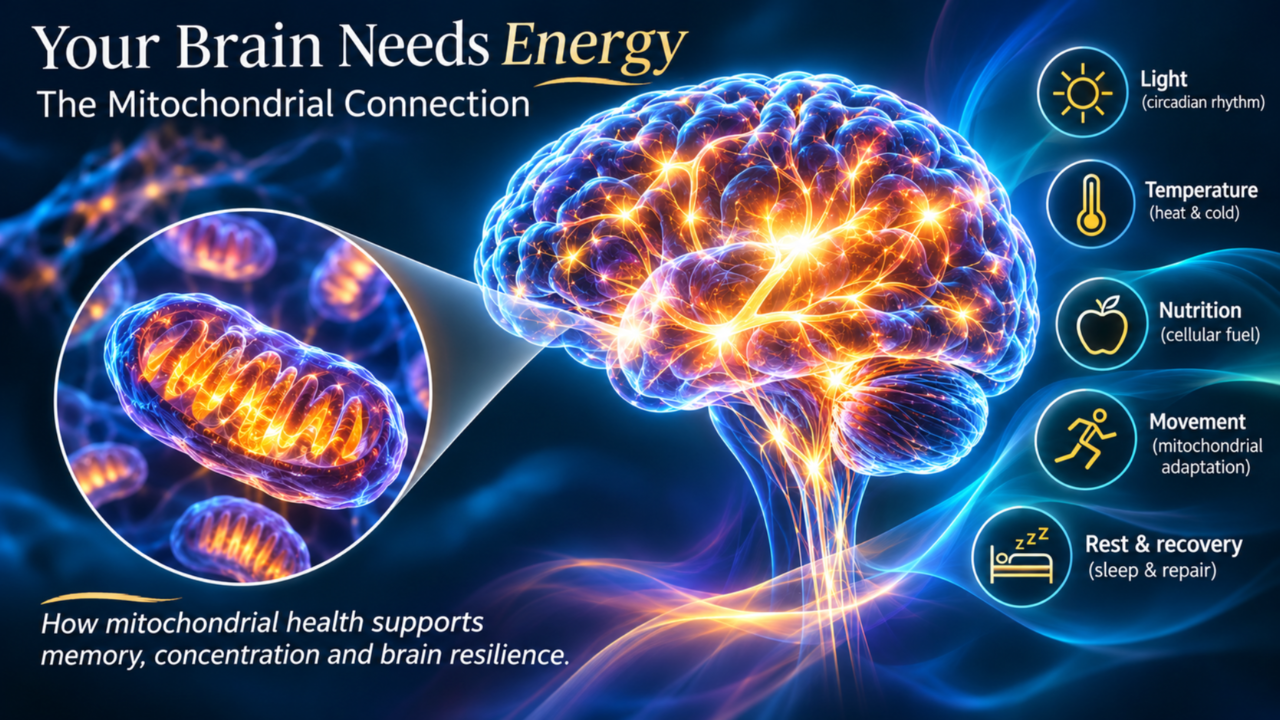
Why mitochondrial health matters for memory, concentration and long-term brain resilience.
Have you ever walked into a room and forgotten why you went there? Struggled to find a familiar word? Or noticed that your concentration isn't quite what it used to be?
Brain fog is particularly common during perimenopause and menopause, but changes in cognitive function aren't always just about hormones.
Your brain is one of the most metabolically active organs in your body. Although it represents approximately 2% of your body weight, it accounts for around 20% of your resting energy expenditure.
But brain health isn't simply about producing more energy. It's also about how our cells communicate, adapt to their environment, manage inflammation and maintain their internal balance.
At the centre of many of these processes are tiny, highly responsive cellular structures called mitochondria.
Mitochondria: More Than Energy Production
Mitochondria are dynamic organelles that do far more than produce ATP, the energy currency of our cells.
They participate in:
-
Energy metabolism: Producing ATP to support cellular activity.
-
Cellular communication: Sending signals that influence how cells respond to their environment.
-
Calcium regulation: Helping control calcium levels essential for neuronal communication.
-
Oxidative stress regulation: Participating in redox signalling and antioxidant defence.
-
Immune signalling: Influencing inflammatory responses and cellular defence mechanisms.
-
Cellular survival: Helping determine how cells adapt, repair or undergo programmed cell death.
Mitochondria also communicate with other cellular structures, including the nucleus and endoplasmic reticulum, coordinating responses to changing conditions.
In the brain, these functions are particularly important because neurons must continuously transmit information while maintaining their own health and stability.
Your Mitochondria Respond to the World Around You
One of the most fascinating aspects of mitochondrial biology is how responsive these organelles are to environmental changes.
Throughout the day, our cells receive signals from light, temperature, movement, nutrition and stress. These signals influence mitochondrial metabolism and the way cells adapt.
Light and circadian rhythms
Natural daylight helps synchronise our internal biological clock, influencing sleep, hormone production and metabolic activity.
Specific wavelengths of red and near-infrared light are also being investigated for their potential effects on mitochondrial signalling and cellular function.
Temperature
Heat and cold exposure activate physiological stress responses that can influence mitochondrial metabolism, cellular adaptation and thermoregulation.
Nutrition
The availability of glucose, fatty acids, amino acids and micronutrients influences mitochondrial activity and metabolic flexibility (our ability to adapt to different energy sources.)
Movement
Exercise stimulates cellular pathways involved in mitochondrial biogenesis, maintenance and quality control.
Stress and recovery
Inflammation, oxidative stress, disrupted sleep and prolonged physiological stress can affect mitochondrial function.
Importantly, some of these environmental effects occur indirectly through hormones, the nervous system and other signalling pathways.
The takeaway? Supporting mitochondrial health isn't just about supplements. It's also about the light we're exposed to, how we move, when we sleep, what we eat and how our bodies respond to environmental challenges.
Why Does Brain Energy Change With Age?
As we age, mitochondrial efficiency and quality-control processes can change.
Chronic inflammation, oxidative stress, insulin resistance, reduced physical activity and poor sleep may place additional demands on our brain cells.
During menopause, declining oestrogen can also influence pathways involved in glucose metabolism, mitochondrial function and neuronal signalling.
Researchers are investigating how these changes may contribute to the brain fog, memory lapses and concentration difficulties experienced by some women during the menopausal transition.
However, not all cognitive symptoms are related to mitochondria or menopause.
Iron or vitamin B12 deficiency, thyroid dysfunction, medication effects, sleep apnoea, depression and other medical conditions can also contribute.
Mitochondria and Neurodegenerative Health
Mitochondrial dysfunction is an important area of research in neurological conditions, including Alzheimer's disease, Parkinson's disease and Motor Neurone disease (MND).
Although these conditions have different causes and clinical presentations, researchers have identified several overlapping biological processes:
-
Impaired mitochondrial function and energy regulation
-
Oxidative stress and altered redox signalling
-
Neuroinflammation
-
Abnormal protein processing and clearance
-
Disrupted cellular communication and repair
These processes can interact, potentially creating cycles of cellular stress.
While mitochondrial dysfunction is associated with neurodegenerative disease, this does not mean it is always the initiating cause, or that improving mitochondrial function alone can prevent or reverse these conditions.
Five Ways to Support Your Brain's Cellular Health
1. Nourish Your Mitochondria
Several nutrients play important roles in mitochondrial function and neurological health.
Coenzyme Q10 (CoQ10)
An essential component of the mitochondrial electron transport chain, supporting ATP production and cellular redox balance.
B Vitamins
Particularly B1, B2, B3, B6 and B12, which participate in energy metabolism, neurotransmitter synthesis and neurological function.
Magnesium
Required for numerous enzymatic reactions, including those involving ATP, and helps regulate normal nerve signalling.
Omega-3 Fatty Acids
DHA is an important structural component of neuronal membranes, supporting membrane integrity and cellular communication.
Creatine
Helps maintain cellular energy availability through the phosphocreatine system. Research into its potential cognitive benefits is growing.
These nutrients are important for normal cellular function, but supplementation should be individualised.
2. Move Your Body Regularly
Physical activity is one of the most accessible ways to support mitochondrial health.
Exercise stimulates pathways involved in mitochondrial biogenesis, improves metabolic regulation and supports cardiovascular health.
It may also increase brain-derived neurotrophic factor (BDNF), a protein involved in neuronal plasticity.
Walking, swimming, dancing, cycling and resistance training can all contribute.
3. Support Healthy Blood Sugar and Circulation
Your brain requires a reliable supply of oxygen and metabolic fuel.
A Mediterranean-style eating pattern rich in colourful vegetables, berries, olive oil, nuts, legumes and oily fish provides nutrients associated with cardiovascular and cognitive health.
Maintaining healthy blood pressure, and blood glucose levels is also important for protecting long-term brain function.
4. Prioritise Sleep and Circadian Health
Sleep is essential for neuronal recovery, metabolic regulation and memory consolidation.
Simple strategies include:
-
Exposing yourself to natural daylight in the morning.
-
Maintaining consistent sleep and waking times.
-
Reducing bright light exposure late in the evening.
-
Keeping your bedroom cool, dark and quiet.
-
Investigating persistent snoring, disrupted sleep or suspected sleep apnoea.
Healthy circadian rhythms help coordinate the metabolic processes that support brain function.
5. Explore Photobiomodulation: Can Light Influence Brain Function?
One emerging area of neurological research is transcranial photobiomodulation (PBM).
This non-invasive technology delivers specific wavelengths of red or near-infrared light through specialised devices, including helmets and headsets.
Researchers are investigating how light may influence mitochondrial signalling pathways, including interactions with cytochrome c oxidase, an enzyme involved in cellular respiration.
Potential effects being studied include:
-
Changes in mitochondrial activity and ATP production
-
Improved cerebral blood flow and oxygenation
-
Modulation of oxidative stress and inflammatory signalling
-
Changes in neural activity and cognitive performance
Early clinical studies and systematic reviews have reported promising findings for some aspects of cognitive function, including attention and working memory.
However, research remains preliminary. PBM should be considered an emerging adjunctive approach rather than an established treatment for cognitive decline, Alzheimer's disease, Parkinson's disease or MND.
The Bigger Picture: Supporting the Brain Starts With the Cell
Brain health isn't just about memory.
It's about maintaining the complex network of cells responsible for movement, communication, learning, emotions and everyday function.
Mitochondria are central participants in this network, helping coordinate energy metabolism, cellular signalling and responses to environmental challenges.
From the light we receive in the morning to the food we eat, the exercise we undertake and the quality of our sleep, our daily environment influences the biological systems that support brain health.
As a naturopath, my approach begins by considering these interconnected cellular processes rather than focusing on symptoms in isolation.
Supporting a healthy brain means supporting the cells that make brain function possible.
Small, consistent changes in nutrition, movement, sleep and metabolic health can make a meaningful contribution to lifelong brain resilience.
Author

Jennifer Harrington
Clinical Director
Menopause Specialist, Naturopath, Nutritionist, Medical Herbalist
Stay connected with news and updates!
Recent Posts
