
Overstimulation in Midlife: Why Noise, Light and Busy Environments Feel Unbearable Now
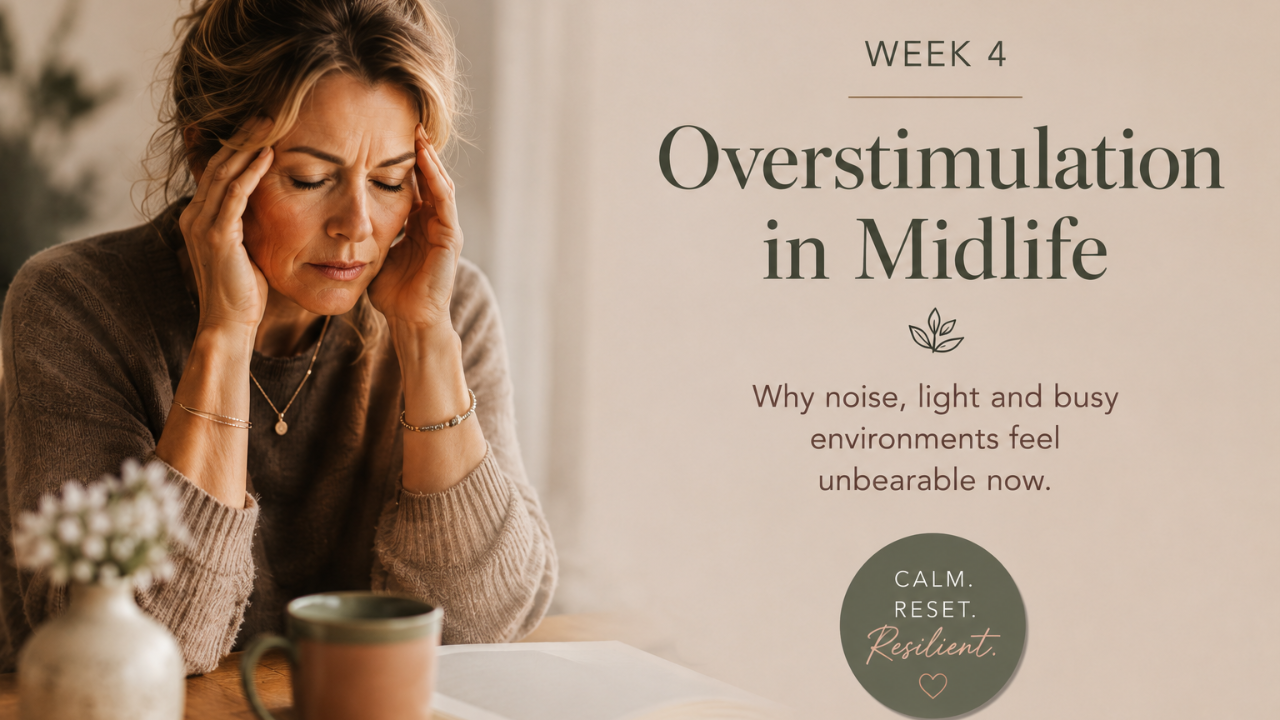
If the grocery store fluorescent lights have started to feel like they're drilling into your skull, or the sound of your family chatting over dinner suddenly triggers an overwhelming urge to leave the room, you're not imagining it. Overstimulation in midlife is one of the most under-recognised yet deeply disruptive symptoms of perimenopause and menopause. When declining hormones collide with a nervous system already working overtime, the world can genuinely start to feel like too much. The good news? Once you understand the root cause, shifting hormones, nervous system dysregulation and sleep disruption, you can take targeted, practical steps to reclaim your calm and feel like yourself again.
What Overstimulation in Midlife Actually Looks Like
Sensory overload during menopause isn't just "being a bit sensitive." It's a whole-body experience that can show up as:
- Sound sensitivity — everyday noises (chewing, keyboard clicks, radio ads) feel unbearably loud or irritating
- Light sensitivity — bright lights, flickering screens and fluorescent lighting cause headaches or discomfort
- Tactile overwhelm — clothing tags, bra seams or even being touched feel intolerable
- Environmental overload — crowded shops, busy restaurants or open-plan offices trigger anxiety, panic or the desperate need to escape
- Smell sensitivity — perfumes, cleaning products or cooking odours become nauseating
If you've found yourself retreating from places and situations you used to handle with ease, that's not a character flaw. It's your nervous system telling you it has exceeded its capacity, and in midlife, the hormonal landscape is a major reason why.
The Hormonal Root Cause: Why Your Threshold Has Dropped
So why does everything feel louder, brighter and more overwhelming now? The answer lives in your changing hormones, and specifically, in how oestrogen and progesterone influence your brain and nervous system.
Oestrogen and Your Sensory Processing
Oestrogen plays a powerful role in regulating neurotransmitters like serotonin, dopamine and GABA — the brain chemicals responsible for mood stability, focus and your ability to filter incoming sensory information. Research has confirmed that oestrogen directly influences auditory processing, visual sensitivity and how the brain perceives stimuli overall.
When oestrogen levels fluctuate wildly during perimenopause, or decline steadily into menopause, your brain's ability to calmly sort through sounds, sights and sensations becomes compromised. Stimuli that your brain once filtered out effortlessly now register as urgent threat signals.
Progesterone: Your Brain's Noise-Cancelling System
Think of progesterone as your natural calm button. It converts into the neurosteroid allopregnanolone, which directly activates GABA receptors, the brain's primary "calm down" system. GABA is essentially the brake pedal of your nervous system.
Progesterone is typically the first hormone to decline in perimenopause, often years before oestrogen drops significantly. Without adequate progesterone (and therefore GABA support), your brain loses its natural noise-cancelling ability. The result? Heightened sensory vigilance, a lower tolerance for stimulation and a nervous system that feels permanently switched to "on."
How Sleep Disruption Makes Everything Worse
Here's a critical piece of the overstimulation puzzle that often gets overlooked: sleep quality.
Night sweats, hormonal insomnia and frequent waking are hallmarks of the menopause transition. Even brief disruptions to your deep sleep and REM sleep, the stages where your brain repairs, consolidates memories and processes emotions, can dramatically lower your sensory threshold the following day.
Research published in sleep and menopause studies consistently shows that:
- Sleep deprivation increases cortisol (your stress hormone), making you more reactive
- Fragmented sleep reduces your brain's filtering capacity, so normal sounds and lights feel amplified
- Poor sleep worsens emotional regulation, creating a vicious cycle where overstimulation triggers anxiety, which then further disrupts sleep
If you notice a pattern where your worst sensory overload days follow nights of poor sleep or night sweats, that connection is not coincidental, it's physiological.
Your Nervous System Is Not Broken. It's Overloaded
At the heart of midlife overstimulation is nervous system dysregulation. Your autonomic nervous system, the system that governs your "fight or flight" (sympathetic) and "rest and digest" (parasympathetic) responses is highly sensitive to hormonal changes.
When oestrogen and progesterone fluctuate or decline:
- Your sympathetic nervous system (the stress response) can become overactivated
- Your parasympathetic nervous system (the calming response) loses hormonal support
- Your body gets stuck in a state of chronic hypervigilance, always scanning for threats, always on edge.
This is why a busy café that you once enjoyed now feels like an assault on your senses. It's not the café that changed. It's your nervous system's capacity to process it that has shifted. And understanding this distinction is empowering, because it means targeted support can make a real difference.
Practical, Evidence-Informed Ways to Reduce Overstimulation
Regulate Your Nervous System Daily
- Breathing exercises: Extended exhale breathing (inhale for 4, exhale for 6–8) activates the parasympathetic nervous system and can shift your state within minutes
- Vagus nerve stimulation: Humming, singing, gargling and cold water on the wrists or face can help tone the vagus nerve, which is central to calming your stress response
- Grounding in nature: Spending time outdoors, barefoot on grass, walking among trees. Has been shown to lower cortisol and recalibrate the nervous system
Optimise Your Sensory Environment
- Reduce noise input: Noise-reducing earbuds or earplugs can be life-changing in busy environments
- Adjust lighting: Swap fluorescent bulbs for warm lighting at home; use blue-light-blocking glasses for screens
- Create a calm space: Designate one room as a low-stimulation retreat — soft lighting, neutral colours, no clutter
- Dress for comfort: Choose tag-free, seamless clothing in soft fabrics — sensory-friendly dressing is not indulgent, it's strategic
Prioritise Restorative Sleep
- Keep your bedroom cool (ideally 18–20°C) to reduce night sweats
- Establish a consistent wake time to build healthy sleep pressure
- Avoid caffeine after midday and alcohol before bed, both fragment sleep architecture
- Consider magnesium glycinate before bed to support GABA activity and promote deeper sleep
Nourish Your Nervous System with Food and Nutrients
Your brain uses enormous amounts of nutrients to function well. Key priorities include:
- Magnesium (leafy greens, nuts, seeds, dark chocolate) essential for nervous system calm and sleep
- B vitamins (eggs, fish, legumes, wholegrains) critical for nerve health and neurotransmitter production
- Omega-3 fatty acids (oily fish, walnuts, flaxseeds) support brain health and reduce neuroinflammation
- Adequate protein at every meal, provides the amino acid building blocks for serotonin and dopamine
Consider Targeted Herbal Support
From a naturopathic perspective, specific herbs and nutrients can be profoundly helpful for overstimulation:
- Passionflower — traditionally used to support relaxation and ease nervous tension
- Lemon balm — calming for the nervous system and helpful for sleep
- Withania (Ashwagandha) — an adaptogenic herb that helps the body manage stress responses
- Saffron — emerging research suggests benefits for mood, focus and sleep in women during hormonal transitions
Always work with a qualified practitioner to ensure the right herbs and doses for your individual needs, particularly if you are taking other medications.
Frequently Asked Questions
Q: Is sensory overload a recognised symptom of perimenopause and menopause?
A: Yes. While it's not always listed alongside hot flushes and mood changes, sensory overload is increasingly recognised as a genuine menopause symptom. Declining oestrogen affects how the brain processes sound, light and touch, while falling progesterone reduces GABA activity — the brain's primary calming system. Many women report heightened sensitivity to noise, bright lights, strong smells and busy environments during the menopause transition.
Q: Will overstimulation get better after menopause?
A: For many women, sensory sensitivity does improve once hormones stabilise in the post-menopausal phase. The brain is remarkably adaptable, and research (including the large SWAN study) shows that many cognitive and sensory symptoms peak in late perimenopause and then gradually ease. In the meantime, targeted nervous system support, good sleep practices and naturopathic care can make the transition significantly more manageable.
Q: How is overstimulation different from anxiety during menopause?
A: While they can overlap, overstimulation is input-driven — it spikes around environmental triggers like noise, light or crowds, and eases quickly when the stimulus is removed. Anxiety tends to be thought-driven — centred around worry, "what-ifs" and future-oriented thinking. A helpful question to ask yourself: If the room got quieter and dimmer right now, would I feel noticeably better within minutes? If yes, sensory overload is likely the primary driver, not anxiety alone.
You're Not "Too Sensitive”. Your Body Is Asking for Support
If the world feels louder, brighter and more overwhelming than it used to, please know this: you are not losing your mind, and you are not overreacting. Your nervous system is navigating one of the most significant hormonal transitions of your life, and it deserves targeted, compassionate support.
Understanding the root cause, the interplay of declining hormones, nervous system dysregulation and disrupted sleep, is the first step. From there, a naturopathic approach that addresses your unique hormonal picture, calms the nervous system and nourishes your body at a cellular level can help you move through midlife with far more ease, clarity and confidence.
If you're ready to stop pushing through and start feeling supported, we here to help you find your way back to calm. Explore Consultations Here to speak with our Naturopath.
Calm. Reset. Resilient.
Article 1: The Menopausal Nervous System
Article 2: Histamine, Adrenaline and Perimenopause
Article 3: Panic Attacks in Perimenopause
This is article 4
Author

Jennifer Harrington
Clinical Director
Menopause Specialist, Naturopath, Nutritionist, Medical Herbalist
Stay connected with news and updates!
Recent Posts
