
Panic Attacks in Perimenopause: Why They Can Appear Out of Nowhere
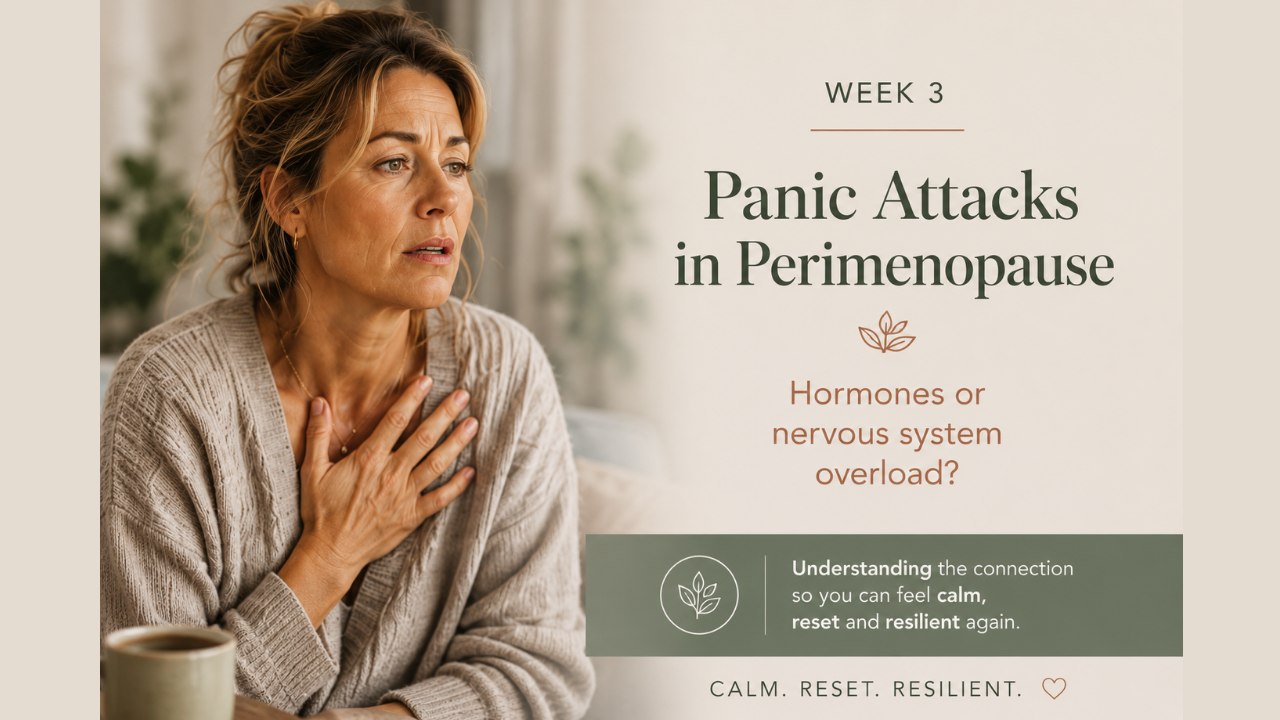
One minute you're fine.
The next, your heart is racing.
Your chest feels tight.
You can't catch your breath.
You feel shaky, overwhelmed or convinced something terrible is about to happen.
For many women, their first panic attack occurs during perimenopause.
What makes it particularly frightening is that it often seems to come out of nowhere. Women who have never considered themselves anxious suddenly find themselves experiencing heart palpitations, breathlessness, dizziness and an overwhelming sense of fear.
Many end up in the emergency department convinced they are having a heart attack.
-
A racing or pounding heart
-
Chest tightness
-
Shortness of breath
-
Dizziness
-
Trembling or shaking
-
Sweating
-
Nausea
-
Tingling sensations
-
An overwhelming sense of fear or doom
Symptoms often peak within minutes but can leave you feeling exhausted afterwards.
Why Does Perimenopause Increase Panic Attacks?
Hormones influence much more than reproduction.
Oestrogen and progesterone also affect the nervous system, stress response and mood.
As hormone levels fluctuate during perimenopause, the nervous system can become more reactive and more likely to shift into a fight-or-flight response.
At the same time, many women are juggling careers, family responsibilities, ageing parents, financial pressures and disrupted sleep.
The result can be a nervous system that feels constantly on high alert.
It's Not Always Anxiety
One of the biggest misconceptions about panic attacks is that they are purely psychological.
Potential contributors include:
-
Hormonal fluctuations
-
Poor sleep
-
Blood sugar instability
-
Histamine intolerance
-
Adrenaline surges
-
Excess caffeine
-
Thyroid dysfunction
-
Nutritional deficiencies
-
Chronic stress
This is why it's important to look beyond the label of anxiety and explore what may be driving the symptoms.
The Histamine-Adrenaline Connection
For some women, panic attacks may be linked to histamine and adrenaline rather than emotional stress alone.
Histamine can stimulate adrenaline release, creating symptoms such as:
-
Anxiety
-
Heart palpitations
-
Feeling wired
-
Restlessness
-
Sleep disturbances
-
Sudden feelings of panic
If this sounds familiar, you may enjoy reading our previous article on Histamine, Adrenaline and Perimenopause.
Overnight Panic Attacks
Waking suddenly with a racing heart and intense anxiety can be particularly frightening.
Hormonal fluctuations, blood sugar changes and adrenaline surges may all play a role.
If symptoms occur primarily overnight or in the early morning, it may also be worth investigating sleep apnoea.
When breathing becomes restricted during sleep, oxygen levels can fall and the body may release adrenaline to restore normal breathing. The result can feel remarkably similar to a panic attack.
Sleep apnoea becomes more common during perimenopause and menopause and is often overlooked in women.
Could It Be a Heart Attack?
While panic attacks are common during perimenopause, it is important not to assume every episode is anxiety-related.
Heart attacks can present differently in women and may include:
-
Chest pressure or tightness
-
Pain in the jaw, neck, shoulder, arm or upper back
-
Shortness of breath
-
Nausea
-
Extreme fatigue
-
Dizziness
-
Cold sweats
-
A feeling that something is not right
If you think you may be having a heart attack, seek emergency medical care immediately.
The Bottom Line
Panic attacks are one of the more frightening symptoms women can experience during perimenopause.
While hormones are often part of the picture, they are rarely the entire story.
Sleep, blood sugar balance, histamine, adrenaline, stress and nervous system health can all contribute.
Understanding what is driving the symptoms is often the first step towards feeling calmer, more resilient and back in control.
Related Reading
- Overstimulation in Midlife: Why noice, light and busy environments feel unbearable now. https://www.menopausenaturalsolutions.com/blog/overstimulation
-
Histamine, Adrenaline and Perimenopause - https://www.menopausenaturalsolutions.com/blog/histamine-adrenaline
-
The Menopausal Nervous System: Why You Feel More Sensitive in Midlife - https://www.menopausenaturalsolutions.com/blog/nervous-system
-
Sleep Apnoea in Menopause - https://www.menopausenaturalsolutions.com/blog/apnea
Author

Jennifer Harrington
Clinical Director
Menopause Specialist, Naturopath, Nutritionist, Medical Herbalist
Stay connected with news and updates!
Recent Posts
