
Histamine, Adrenaline and Perimenopause: The Missing Piece in Midlife Anxiety
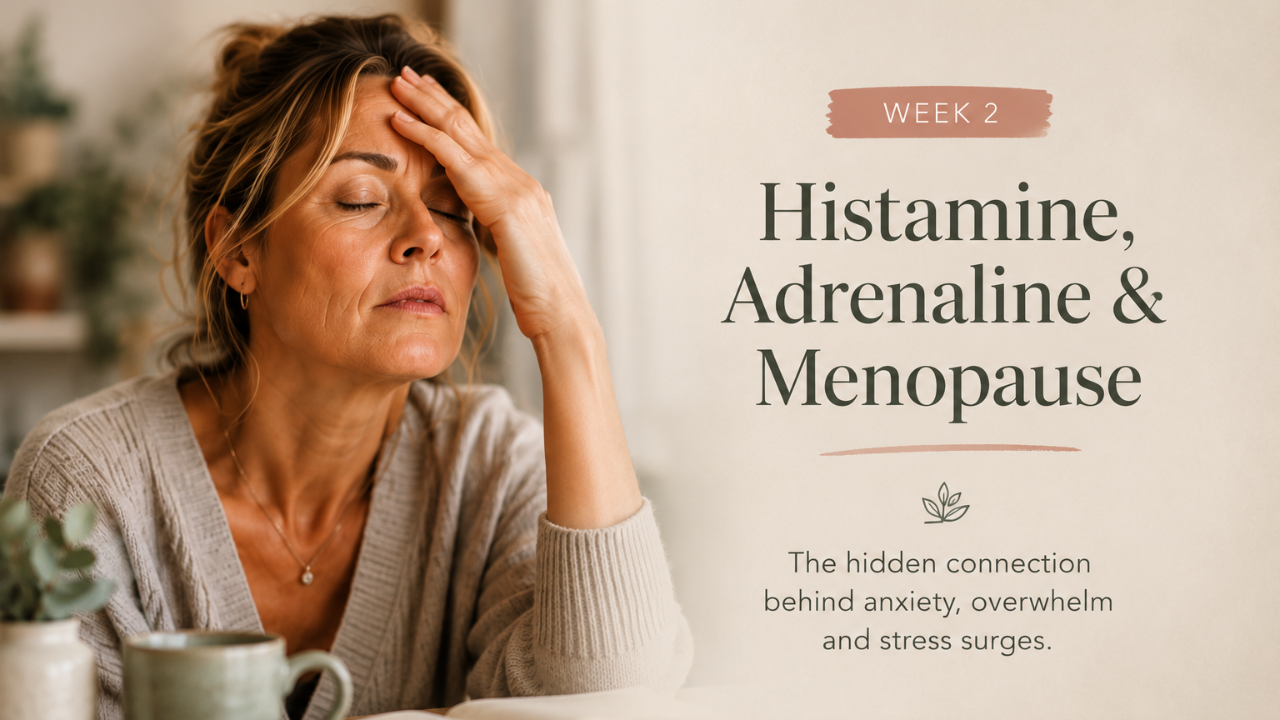
Have you ever found yourself feeling anxious, overwhelmed, restless or "on edge" for no obvious reason?
Perhaps your heart suddenly races.
You wake at 3am unable to get back to sleep.
A glass of wine leaves you feeling flushed and wired.
Or you feel like you're constantly running on adrenaline.
Many women assume these symptoms are simply part of stress, ageing, or changing hormones.
But there may be another player involved: histamine.
What Is Histamine?
Most people associate histamine with allergies, but it also plays important roles in the immune system, digestion, brain function and nervous system.
Histamine isn't bad. We need it.
Problems arise when histamine levels become excessive or the body struggles to break it down efficiently.
If you're unfamiliar with histamine and the many ways it can affect the body, you may also enjoy my article on Histamine Intolerance, where I explore histamine in greater detail.
Why Histamine Matters During Perimenopause
Perimenopause is characterised by fluctuating oestrogen and progesterone levels.
Oestrogen can stimulate the release of histamine, while histamine can further stimulate oestrogen activity.
This creates a cycle where hormonal fluctuations and histamine can amplify one another.
For some women, this may contribute to symptoms becoming more noticeable during the years leading up to menopause.
The Histamine-Adrenaline Connection
Histamine doesn't just affect allergies. It can also activate the nervous system.
When histamine levels rise, the body may release adrenaline, triggering symptoms such as anxiety, heart palpitations, feeling wired, restlessness, poor sleep and even sudden feelings of panic.
This is one reason histamine is often overlooked. While some women experience anxiety and insomnia, others notice symptoms that seem completely unrelated.
Common histamine-related symptoms may include:
-
Anxiety or panic
-
Heart palpitations
-
Poor sleep
-
Feeling wired but tired
-
Migraines and headaches
-
Flushing
-
Itchy skin
-
Nasal congestion
-
Dizziness
-
Bloating
-
Nausea
-
Increased sensitivity to alcohol
Many women also notice they suddenly react to foods and drinks that never bothered them before.
Because histamine can influence the immune system, digestive system, cardiovascular system and nervous system, the symptoms can vary considerably from one woman to the next.
Many women believe they are developing anxiety when their body may actually be responding to a combination of hormonal fluctuations, histamine activity and adrenaline release.
What Can Help?
Supporting histamine balance isn't just about avoiding histamine-containing food.
It's about supporting the systems that regulate histamine and calm the nervous system.
Helpful foundations include:
- Prioritising sleep
- Stabilising blood sugar
- Supporting gut health
- Reducing alcohol intake
- Managing stress
- Addressing nutritional deficiencies
- Supporting healthy hormone balance
The Bottom Line
If perimenopause has left you feeling anxious, overwhelmed, wired or unable to relax, hormones may not be the whole story.
Histamine and adrenaline may also be contributing to the picture.
Understanding this connection can help explain why symptoms such as anxiety, racing thoughts, poor sleep, heart palpitations, migraines, flushing and itching often seem to appear out of nowhere during midlife.
Sometimes what feels like anxiety isn't simply anxiety.
It may be your hormones, immune system and nervous system all having a conversation.
Next week we'll explore panic attacks in perimenopause and why so many women suddenly experience adrenaline surges and feelings of fear during this stage of life.
Calm. Reset. Resilient.
Article 1: The Menopausal Nervous System
This is Article 2
Article 3: Panic Attacks in Perimenopause
Article 4: Overstimulation in Midife
Author

Jennifer Harrington
Clinical Director
Menopause Specialist, Naturopath, Nutritionist, Medical Herbalist
Stay connected with news and updates!
Recent Posts
