
Why Menopause Changes Your Sense of Taste
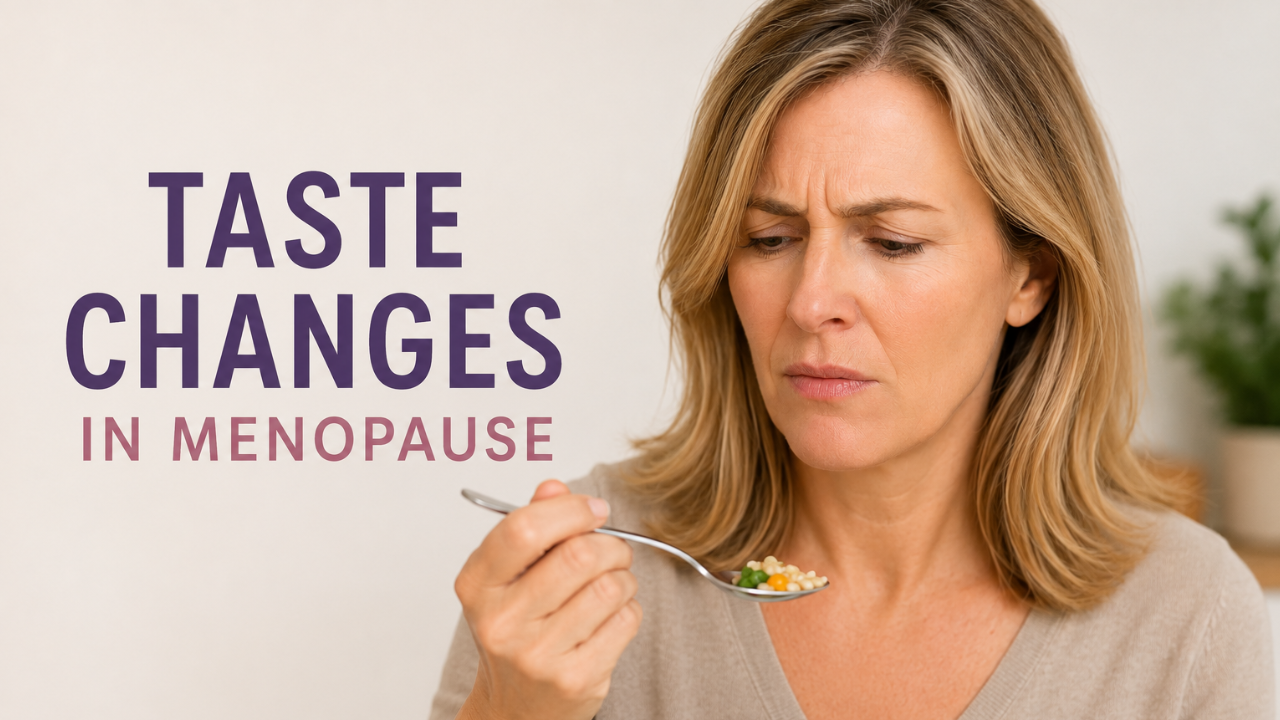
Have you ever taken a bite of your favourite meal and thought, "That doesn't taste the same anymore?"
Perhaps your morning coffee tastes bitter, your favourite meal seems bland, or you've developed a metallic taste that wasn't there before.
If you've noticed food tasting different during menopause, you're not alone. Whether food seems bland, you've developed a metallic taste, or your favourite meals no longer taste the same, changes in taste are a surprisingly common symptom of the menopausal transition.
Like many menopause symptoms, taste changes are rarely caused by hormones alone. They often reflect changes across the nervous system, oral health, smell, nutrient status and inflammation, all of which can shift during midlife.
How Does Your Sense of Taste Work?
Your tongue contains thousands of taste buds that detect five basic tastes:
-
Sweet
-
Salty
-
Sour
-
Bitter
-
Umami (savoury)
But taste is only part of the story.
The flavour you experience when eating also depends on:
-
Your sense of smell
-
Healthy saliva production
-
Intact cranial nerves
-
Brain processing
-
A healthy mouth and oral microbiome
When one or more of these systems changes, food can taste noticeably different.
Why Menopause Can Change Your Sense of Taste
1. Falling Oestrogen Can Reduce Taste Sensitivity
Taste buds constantly regenerate throughout life, and oestrogen helps support this process.
As oestrogen levels decline, taste buds may become less responsive, meaning flavours don't seem as vibrant as they once did.
You may notice yourself:
-
Adding more salt or seasoning
-
Preferring stronger flavours
-
Enjoying spicy foods more
-
Losing interest in favourite meals
2. Changes in Smell Affect Flavour
Most of what we think of as flavour actually comes from our sense of smell.
If menopause affects your ability to smell, as it commonly can, food may suddenly seem:
-
Bland
-
Flat
-
Less enjoyable
-
Different from what you remember
This is why many women experience changes in taste and smell together. If you've also noticed changes in your sense of smell, you may find our article on How Menopause Changes Your Sense of Smell helpful.
3. Dry Mouth Can Reduce Taste
Oestrogen also helps maintain healthy saliva production.
As levels fall, some women develop a persistently dry mouth, making it harder for taste buds to detect flavours.
Common signs include:
-
Dry or sticky mouth
-
Needing frequent sips of water
-
Difficulty swallowing dry foods
-
Reduced enjoyment of meals
4. Nutrient Deficiencies May Play a Role
Several nutrients are essential for healthy taste perception, including:
-
Zinc
-
Vitamin B12
-
Iron
-
Vitamin A
Zinc deficiency, in particular, is a well-recognised cause of both reduced taste and smell.
While menopause doesn't directly cause these deficiencies, changes in digestion, diet, medication use and overall health can increase the likelihood of developing them.
5. Your Brain Processes Taste Too
Taste isn't just detected by your tongue, it's processed by your brain.
The cranial nerves that carry taste signals, along with the brain regions responsible for interpreting them, are influenced by hormonal changes.
Many women also notice changes in:
-
Smell
-
Hearing
-
Balance
-
Light sensitivity
-
Noise sensitivity
Taste changes may simply be another sign that the nervous system is becoming more sensitive or processing sensory information differently.
Less commonly, neurodegenerative conditions such as Parkinson's disease and Alzheimer's disease can also impair the brain's ability to process taste and smell. Although menopause is a much more likely cause of new taste changes in midlife, persistent or progressive symptoms, especially when accompanied by other neurological changes, should always be medically assessed.
6. Inflammation and Oral Health
Menopause can also affect the health of your mouth.
Reduced oestrogen may contribute to changes in the oral microbiome, while inflammation can interfere with normal taste bud function.
Some women experience:
-
Gum inflammation
-
More frequent oral infections
-
Changes in saliva quality
-
Altered taste perception
You can learn more about these changes in our articles on Burning Mouth Syndrome and Menopause and Menopause and Oral Health.
What Do Taste Changes During Menopause Feel Like?
Common changes include:
-
Food tasting bland
-
A metallic taste in the mouth
-
Bitter flavours becoming stronger
-
Sweet foods tasting different
-
Needing more seasoning than before
-
Certain foods suddenly becoming unpleasant
-
Craving stronger or spicier flavours
-
Losing enjoyment of foods you once loved
These symptoms may fluctuate with hormonal changes, illness, stress, medications or nutritional status.
Can Taste Return?
For many women, yes.
The extent of recovery depends on what's contributing to the change, but supporting the underlying causes often helps.
Helpful strategies may include:
-
Staying well hydrated
-
Addressing dry mouth
-
Correcting nutrient deficiencies where appropriate
-
Supporting good oral hygiene and oral microbiome health
-
Reducing inflammation
-
Improving sleep quality
-
Supporting nervous system regulation
-
Reviewing medications that may affect taste
If your taste changes are sudden, severe, affect only one side of the mouth, or occur alongside facial weakness, difficulty swallowing or other neurological symptoms, seek prompt medical assessment.
The Bottom Line
If food simply doesn't taste the way it used to, you're not alone.
Changes in taste are another example of how menopause affects far more than reproductive hormones. Declining oestrogen can influence taste buds, smell, saliva, nutrient status, oral health and the way your brain processes sensory information.
The good news is that these changes are often worth investigating rather than simply accepting as part of ageing.
Understanding what's driving the change is the first step towards finding the right support, and helping you enjoy food again.
Related Articles
If you're experiencing changes in taste during menopause, you may also find these articles helpful:
Author

Jennifer Harrington
Clinical Director
Menopause Specialist, Naturopath, Nutritionist, Medical Herbalist
Stay connected with news and updates!
Recent Posts
