
The Midlife Nervous System Survival Guide
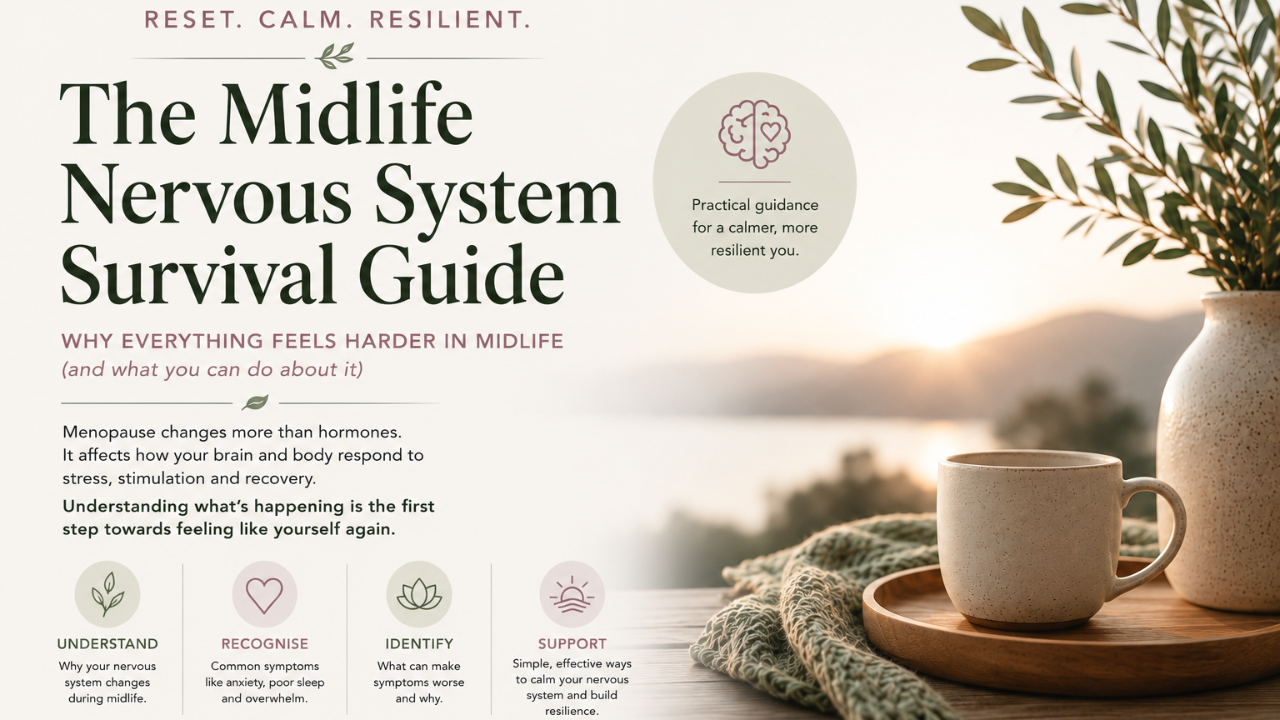
Why Everything Feels Harder During Perimenopause and Menopause
Many women enter their 40s or 50s expecting hot flushes and irregular periods.
What they don't expect is feeling overwhelmed by everyday life.
Suddenly they become more anxious, less resilient, unable to tolerate busy environments, easily startled by noise, struggling to recover from stress, waking at 3am with a racing heart, or experiencing panic attacks they've never had before.
If this sounds familiar, you're not imagining it.
One of the biggest changes occurring during the menopause transition isn't just hormonal—it's neurological.
Your nervous system is changing.
Understanding why can be one of the most reassuring steps in regaining your confidence and resilience.
Your Nervous System Is Working Harder Than It Used To
Oestrogen and progesterone do far more than regulate reproduction.
They also influence many of the brain chemicals that help us feel calm, emotionally balanced and resilient, including:
-
GABA
-
Serotonin
-
Dopamine
-
Cortisol regulation
-
Histamine metabolism
-
Autonomic nervous system balance
As hormone levels fluctuate during perimenopause, your nervous system often becomes more reactive.
The result?
You may feel as though you're coping with life using a much smaller battery than you once had.
Things that never bothered you before suddenly feel exhausting.
Four Ways Your Nervous System Changes During Midlife
1. You Feel More Sensitive
Many women notice they become increasingly sensitive to stress, conflict, caffeine, alcohol, poor sleep and even busy social situations.
This isn't weakness.
It's often a sign that your nervous system has become more easily activated.
Read more:
The Menopausal Nervous System: Why You Feel More Sensitive in Midlife
2. Histamine and Adrenaline Can Keep You Stuck in Fight-or-Flight
Histamine isn't just involved in allergies.
It can stimulate adrenaline release, making many women feel:
-
Wired
-
Anxious
-
Restless
-
Unable to relax
-
More prone to palpitations
-
Sensitive to certain foods or alcohol
Hormonal changes can make this histamine-adrenaline cycle much more noticeable during midlife.
Read more:
Histamine, Adrenaline and Perimenopause
3. Panic Attacks Can Appear Out of Nowhere
Many women experience their first panic attack during perimenopause.
Often there is no obvious trigger.
Instead, fluctuating hormones, sleep disruption, cortisol changes, blood sugar instability, histamine and an overloaded nervous system all combine to create the perfect storm.
If your panic attacks occur overnight or wake you from sleep, it's also worth discussing screening for sleep apnoea with your healthcare practitioner, as untreated sleep-disordered breathing can place significant stress on the nervous system.
Read more:
Panic Attacks in Perimenopause
4. Everyday Life Can Become Overstimulating
Crowded shopping centres.
Bright lights.
Background conversations.
Strong perfumes.
Busy family homes.
For many women these environments suddenly become overwhelming.
Your brain isn't failing.
It's simply processing far more sensory information than it used to while operating with less neurological reserve.
Read more:
Overstimulation in Midlife: Why Noise, Light and Busy Environments Feel Unbearable Now
Why Resilience Changes During Menopause
Stress isn't simply about what's happening around you.
It's about how much capacity your nervous system has available.
When recovery becomes inadequate because of hormonal changes, poor sleep, chronic stress, inflammation, nutritional deficiencies, blood sugar instability or illness, your nervous system gradually loses its buffer.
Small stressors begin to feel like major ones.
This is why many women say:
"I just don't feel like myself anymore."
How to Support Your Nervous System
The goal isn't simply to reduce symptoms.
It's to increase your nervous system's capacity so it can cope with life's demands again.
Some of the most effective strategies include:
-
Prioritising restorative sleep
-
Eating enough protein and maintaining stable blood sugar
-
Correcting nutritional deficiencies
-
Supporting healthy hormone balance
-
Identifying histamine triggers if appropriate
-
Daily nervous system regulation through breathing, mindfulness, time in nature or gentle movement
-
Building recovery into your week instead of pushing through exhaustion
-
Addressing underlying contributors such as inflammation, gut health, trauma, chronic infections or environmental toxin exposure where relevant
Recovery doesn't usually come from one supplement or one hormone.
It comes from supporting the whole system.
You Don't Need to Just Push Through
One of the biggest misconceptions about menopause is that women simply need to become tougher.
In reality, your nervous system may be working much harder than it ever has before.
Understanding what's happening allows you to stop blaming yourself and start supporting the systems that have quietly been carrying you for decades.
With the right approach, many women notice significant improvements in resilience, sleep, mood, concentration and their ability to enjoy life again.
Your nervous system isn't broken.
It's asking for support.
Ready to Feel Like Yourself Again?
If you're experiencing anxiety, overwhelm, panic attacks, poor stress tolerance, sensory sensitivity or simply don't feel like yourself anymore, these symptoms deserve to be investigated rather than dismissed as "just menopause."
Through my Personalised Support & Natural Menopause Mastery Program, I help women uncover the underlying drivers contributing to their symptoms and create practical, evidence-informed treatment plans that support both hormones and the nervous system.
If you're ready to understand what's happening in your body and take the next step towards feeling calmer, stronger and more resilient, I'd love to help.
Author

Jennifer Harrington
Clinical Director
Menopause Specialist, Naturopath, Nutritionist, Medical Herbalist
Stay connected with news and updates!
Recent Posts
